There’s a moment most guitarists know all too well — you’ve got a beat going, you know your pentatonic scale, and somehow what comes out still sounds like… nothing in particular. No groove, no direction, no feel. Just notes.
That’s exactly what I wanted to dig into when Ariel Posen came by the studio. If you don’t know Ariel, he’s one of the most distinctive voices in modern Americana — a guitarist whose command of timing, phrasing, and tone puts him in a category of his own. And the first thing he did when he picked up a guitar was remind me — and everyone watching — that the notes you play are only a small part of the picture.
Start With Rhythm, Not Scales
The first thing Ariel said when we set up a simple kick-snare beat was: think rhythmically first. Don’t reach for a scale pattern. Don’t think about where you’re going on the neck. Think about a part, a progression, something with intention behind it.
To demonstrate, he used the chord foundation from his song “Future Present Tense” — three chords, E, G, and A, with some chromatic power chord movement in between. Simple as it gets. But over a groove, it immediately had a personality that most guitarists never find even with far more complex ideas.
The lesson here is important: a musical idea isn’t defined by its complexity, it’s defined by how it sits in time.
The Power of Laying Back
Once we had that simple foundation going, Ariel introduced something that separates great feel players from everyone else — the concept of laying back.
At medium tempo, placing your notes slightly behind the beat creates a kind of gravitational pull. Ariel described it as the D’Angelo effect: that uneasy, heavy feeling you get when the music seems to drag in the most satisfying way possible. It’s not sloppiness — it’s a deliberate choice.
He demonstrated the difference between playing straight on top of the beat versus pulling back, and the contrast was immediate. The laid-back version had a weight to it, a slow-burn tension that made you lean forward in your seat.
The key detail? When playing straight, he held back on the ghost notes and rhythmic fills. When he started laying back, he also started filling in more rhythmic space — muted ghost notes, percussive hits, the kind of thing that makes the guitar feel like it’s carrying the whole groove on its own.
Be Your Own Drummer
This led to one of my favorite ideas from the whole conversation: play like there’s no one accompanying you.
Ariel pointed to bluegrass mandolin as a reference — the way a mandolin player in a band setting will often imply both the kick and the snare in their strumming. As a guitarist, you can do the same.
By working ghost notes and muted percussive hits into your playing, you give the listener enough rhythmic information to groove independently, even without a full band underneath.
It sounds simple, but think about what that really means. If your playing is rhythmically complete — if it has bass, melody, and percussion all suggested within it — then you’re not relying on anything else to make it feel good. You’re self-sufficient as a musical entity.
Try it. Set up the most basic drum loop you can find, and play like the loop might cut out at any moment and you’d still be holding the groove together.
Staying Melodic Without Losing the Groove
Here’s where a lot of guitarists go wrong when they try to “add more.” They leave the groove behind entirely and start chasing notes up and down the neck. Ariel was very clear on this: it doesn’t matter how good the notes are if you’ve lost the rhythmic thread.
He demonstrated what it sounds like when a guitarist mentally disconnects from the groove to play lead — and then immediately showed what it sounds like when you stay locked in. The difference wasn’t about what notes were played. It was about whether the internal metronome kept ticking the entire time.
Even when Ariel was playing multi-bar lines, I could still hear the implied chord changes. The bass notes were still there in spirit. When he landed back on the root at the right moment, it felt like arriving home — not because he’d played something complicated, but because everything had been pointing there all along.
The rule of thumb: highlight the changes, don’t abandon the foundation.
Triads, Inversions, and Coloring the Same Idea
Once the rhythmic foundation is solid, the next step is learning to color the same musical territory in different ways. This is where Ariel’s knowledge of the neck comes in.
Rather than thinking in scale patterns, he thinks in chord shapes — specifically triads and their inversions. Taking our three-chord progression (E, G, A), he showed how each chord exists all over the neck in different voicings. Root position, first inversion, second inversion — each one with its own tonal character and its own possibilities for lines and fills.
For example, the second inversion of A major gives a tighter, slightly nastier tone that works brilliantly with fuzz. From there, you can build melodic ideas that outline the harmony rather than just floating over it.
And this is the part I always want people to hear clearly: Ariel was quick to say that none of this is talent. It’s time spent memorizing where the chords live on the neck. That’s it. No shortcut, no trick — just deliberate study until the shapes become second nature.
If you want to go deeper on this, check out the triads video we made together — it covers a lot of this ground in detail.
Straight, Swung, and the Space In Between
With the melodic and harmonic side covered, Ariel went back to feel — specifically the difference between straight and swung time, and the fascinating gray area between them.
Straight eighth notes. Swung eighth notes. Most guitarists know the difference. But Ariel talked about a third zone — something he and drummer Ash Soan (who he plays with regularly) call “fifths” or what most of us might call a “drunken swing”.
It’s that slightly behind-the-beat, wonky, stumbling feel associated with producers like J Dilla. Notes that almost sound out of time, until they resolve and suddenly everything clicks back into place.
It does sound a little wrong at first — unsettling, off-kilter. But that tension is entirely intentional, and when the resolution comes, the relief is palpable.
The lesson: discomfort in time can be a tool, not a mistake. The comments section might not always understand it, but that’s part of what separates intentional playing from accidental playing.
Applying It to More Complex Harmony
To close things out, I changed the BPM on Ariel mid-session and asked him to step into a more sophisticated chord structure — just to see how all of these ideas held up over more complex changes.
Here are the chords he played:
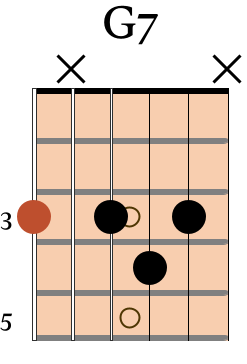
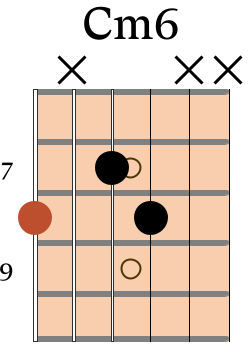
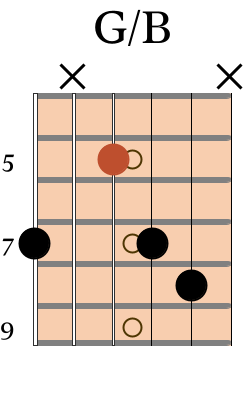
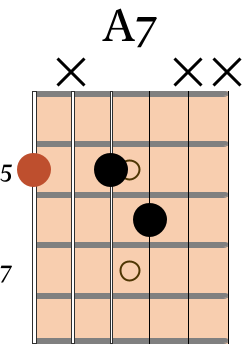
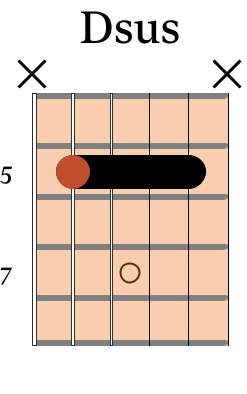
So he moved from a G, up chromatically to a C minor (the four minor, with the added sixth for color), down to G over B, and then through a 2-5-1 — A7 to a Dsus resolution back to G. Trickier changes, but the approach stayed the same.
Rather than switching scales or thinking modally, Ariel keeps the key center in mind the whole time. When a chord like C minor comes up (the four minor in G major), he’s immediately thinking about how its tones relate to the home key — the flat third, the fifth — and he targets the most colorful notes accordingly.
His go-to? The third of each chord. It’s the note that tells you the most about where the harmony is and where it wants to go.
The backing chords are always present in his mind, even when he’s soloing. He approaches everything like it’s a song — not an exercise, not a scale pattern, but a piece of music with movement and direction.
The Takeaway
Everything Ariel talked about in this session points to the same underlying idea: intention beats information every time. You can know every scale, every mode, every chord voicing — but if you don’t know why you’re playing what you’re playing, or when to play it, the music won’t land.
Start simple. A kick, a snare, three chords. Play rhythmically. Stay locked in. Memorize the triads. Color the same idea in different ways. And learn to use time as a creative tool — not just as a metronome you’re trying to stay on top of.
Ariel’s new album Bannatyne is out now — go check it out and hear all of these ideas in their natural habitat.
And if you want to memorize triads all over the fretboard and gain confidence targeting chords tones in this way, check out my course Next Level Playing. It will help you do just that.