Without the oud, the guitar as we know it wouldn’t exist. This ancient instrument, dating back thousands of years, carries immense cultural identity throughout the Middle East and North Africa. Known as “the king” or “sultan of instruments” in Arabic culture, the oud offers a gateway into a musical world built on microtonal scales, drone notes, and improvisation rooted in emotion rather than rigid structure.
For guitarists raised exclusively on Western music, the oud represents both familiar territory and completely new ground. The tuning resembles guitar tuning, the playing techniques share some similarities, but the lack of frets, the maqam system, and the use of microtones create an entirely different musical language—one that predates and influenced the development of the guitar itself.
Meeting the Masters in the Birthplace of the Oud
Exploring the oud properly requires guidance from those who’ve devoted their lives to mastering it. So I went to find out more at The Art of Guitar, an instrument store and music academy in Dubai, where two master oud players shared their knowledge and passion for this ancient instrument.
Kamal Musallam, an Arabic fusion oud and guitar player who developed a unique sound blending traditional and modern styles, has performed with legends around the world. His approach to the oud incorporates guitar techniques while respecting the instrument’s traditional voice.
Bechir Dridi, a professional oud and ney (Arabic flute) player from Tunisia, brings deep knowledge of traditional maqam playing and the classical Arabic approach to improvisation. Together, they provided insight into an instrument that has remained central to Arabic music for millennia.
The Oud’s Construction and Tuning
The first thing that catches attention when examining an oud are the strings. Like classical guitar strings but arranged in double courses (pairs), the oud typically has five or six courses. The strings are doubled except for the lowest bass string, which remains single to provide a clear drone foundation.
The tuning demonstrated used an F-to-F system:
- Low F (single bass string)
- A (double course)
- D (double course)
- G (double course)
- C (double course)
- High F (double course)
So from low to high, the tuning runs as follows:
F A D G C F
This translates fairly directly from standard guitar tuning. Take a guitar in standard tuning (E-A-D-G-B-E), tune the B string up a half-step to C, tune the high E string up a half-step to F, and tune the low E string up to F. You’ve essentially created an all-fourths tuning similar to the oud, eliminating that awkward major third interval between G and B strings that guitar players constantly compensate for.
The Drone String’s Purpose
That single low bass string serves a specific function in Arabic music: creating a constant drone that supports the melody played on higher strings. This gives the oud player a built-in accompaniment—a sonic foundation that reinforces the tonal center while allowing melodic freedom above it.
As Kamal explained, the drone “accompanies and builds a very solid base for the whole music that’s coming on top of it.” Listen to traditional oud playing and you’ll hear how that bass note grounds everything, almost like having your own backing track built into the instrument.
The Fretless Challenge and Advantage
The most obvious difference between oud and guitar is the complete absence of frets. For guitarists accustomed to frets providing precise intonation, the fretless fingerboard presents both a challenge and an opportunity.
Without frets, you must develop precise muscle memory combined with acute ear training. You can’t rely on tactile feedback to tell you where the note is—you have to know through a combination of hearing and physical memory.
As Kamal put it: “Guitarists have this easiness of having a fret, so that’s where the note is. But here you have to be precise. If I want to play this note, I know it’s here, so I have to stop here. There’s no fret, but I know it’s here.”
The connection between ear and muscle memory becomes stronger than what guitar typically requires. Many beginners start by placing tape markers on the fingerboard of the oud to indicate note positions, gradually removing them as muscle memory develops and ear training improves.
The Expressive Advantage
The lack of frets unlocks expressive possibilities that are impossible on guitar. Slides become infinitely smooth rather than stepwise. Vibrato can be wider and more vocal. Most importantly, you can play microtones—the “in-between” notes that give Arabic music its distinctive character.
The traditional Arabic tremolo picking style combined with the fretless fingerboard creates the oud’s signature sound—a shimmering, almost vocal quality with subtle pitch variations that bring melodies to life.
The Risha: The Oud’s Unique Pick
The oud uses a specialized pick called a risha—a word that literally means “feather” in Arabic. Originally made from eagle feathers, modern rishas are typically plastic but maintain the traditional shape and function.
The risha is held differently than a guitar pick. You place it on your fingers and press with your thumb to secure it, hiding the excess length in your palm. The picking motion uses primarily downstrokes, as this generates more power and resonance from the acoustic instrument.
The attack from a risha is notably different from a standard guitar pick—more percussive, more present. It’s part of what gives the oud its characteristic voice, especially when playing traditional rhythmic passages and ornamental techniques.
Understanding Maqam: More Than Just a Scale
Western music theory teaches scales—organized sequences of notes from one pitch to another. Arabic music uses maqamat (plural of maqam), which translates roughly as “scale” but carries deeper meaning.
As Kamal explained: “Maqam is not just a scale. The word ‘scale’ is more of a technical term where you start at a point and end at another one. But maqam is a state of mind, a mood. When you play a maqam—whether it’s Kurd, Rast, or Bayati—you have to enter the mood of that maqam and within that mood, you express something.”
Maqam as Musical Journey
A maqam functions similarly to Indian raga in that it encompasses not just the notes but the emotional territory, the typical melodic phrases, the patterns of tension and release. Performers don’t just play notes from a maqam—they explore its emotional landscape, modulate to related maqamat, and return, creating a musical journey.
Bechir demonstrated moving through three different maqamat in a single piece, showing how skilled players modulate between these modal systems as fluidly as jazz musicians move through key changes.
The Microtonal Magic: Half-Flats and Quarter Tones
The element that most distinctly separates Arabic music from Western music is the use of microtones—intervals smaller than a half-step. These “in-between” notes create the characteristic sound that immediately signals Middle Eastern music to Western ears.
Understanding Half-Flats
Kamal demonstrated this beautifully starting with a C major scale that Western ears recognize immediately. Then he altered two notes:
- The E becomes E half-flat (halfway between E and E-flat)
- The B becomes B half-flat (halfway between B and B-flat)
This creates Maqam Rast, one of the most fundamental Arabic maqamat.
The E half-flat sits in a fascinating space between major and minor. In Western music, we’re conditioned to hear major (natural E) or minor (E-flat) as distinct emotional colors. The half-flat exists in between—what Kamal called “the Arabic dirty major.” It’s perceived as major-ish but with a different emotional quality than pure major.
The Three Primary Maqamat
Maqam Ajam: This is simply the Western major scale, also used in Arabic music as its own maqam. It’s the familiar do-re-mi we all know.
Maqam Rast: The “dirty major” with E half-flat and B half-flat. This is one of the most important and commonly used maqamat.
Maqam Nahawand: The natural minor scale, the sixth mode of the major scale (Aeolian mode). This translates directly from Western music theory.
When you add the raised seventh degree to Nahawand, you get the harmonic minor scale—another sound Westerners associate stereotypically with Middle Eastern music.
Maqam Hijaz: The Quintessential Sound
The fifth mode of the harmonic minor scale creates Maqam Hijaz, perhaps the most recognizable maqam to Western ears. This is the sound we immediately associate with Arabic, Turkish, and North African music—dramatic, exotic, filled with tension.
Maqam Bayati uses the same half-flat notes as Rast but starts from a different tonal center (from D instead of C), creating an entirely different mood despite using the same interval structure.
The Drone’s Role in Maqam Playing
The drone string takes on special significance in maqam-based music. Because a maqam isn’t just a scale but an emotional territory explored over time, having a constant reference pitch allows the player tremendous melodic freedom.
When jamming with Kamal over a simple F drone, the ambiguity of that single note allowed movement between major, minor, and all the microtonal flavors in between. The drone doesn’t dictate the harmony—it provides a foundation that supports whatever emotional direction the melody takes.
This differs fundamentally from Western chord progressions where harmony changes regularly and constrains melodic choices. In maqam improvisation, the drone remains constant while the melody explores the full emotional range of the maqam.
Learning to Play: The Beginner’s Challenge
Attempting to play the oud as a guitarist reveals how dependent Western players are on frets for intonation. Playing even a simple maqam becomes an exercise in precise ear training.
The immediate challenge: finding that E half-flat. Too sharp and it’s a natural E. Too flat and it’s an E-flat. The correct pitch exists in a tiny sweet spot that requires millimeter-level precision on a fretless fingerboard with no tactile reference points.
The experience is humbling. “Not even a millimeter I’m moving and it’s wrong,” accurately describes the learning curve. But this precision work develops your ear in ways that fretted instruments simply don’t require.
The “Dirty” Arabic Chords
Once you can find the microtonal notes, you can create what Kamal calls “Arabic dirty chords”—chords that use those half-flat intervals. Play a major chord, then a minor chord, then substitute the minor third with that half-flat third. The resulting chord exists in emotional territory between major and minor—definitively neither yet somehow both.
Modern Innovations: The Electric Oud
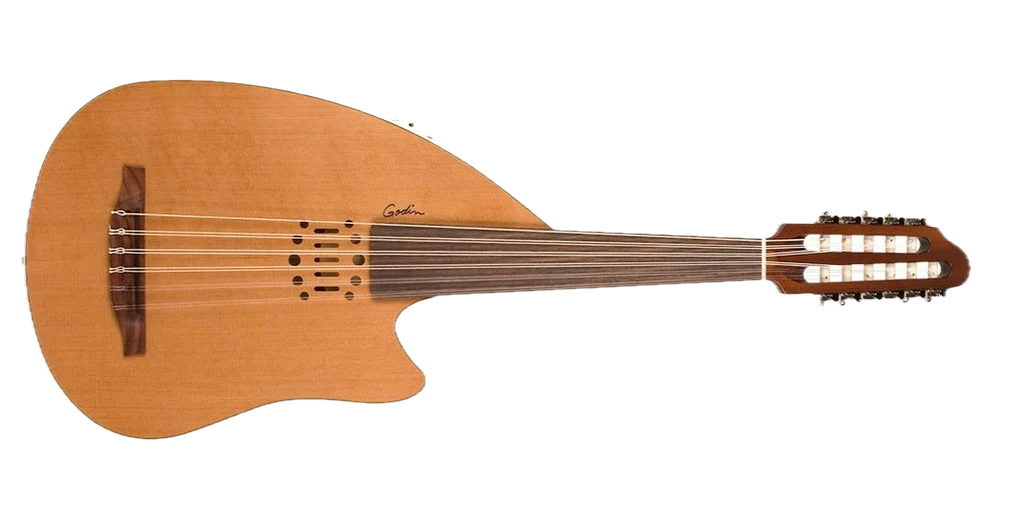
While traditional acoustic ouds remain central to Arabic music, modern players have developed electric versions that address practical performance challenges.
Kamal’s electric oud, developed over 13 years of refinement, maintains the oud’s distinctive shape while incorporating guitar-like features: a cutaway for accessing high frets, a pickup system that resists feedback at high volumes, and the ability to use effects pedals.
This allows fusion players to blend oud with modern instrumentation—drums, bass, electric guitars—without the acoustic oud getting lost in the mix or feeding back uncontrollably. You can add distortion, chorus, delay, or any effect while maintaining the oud’s essential voice.
The electric oud opens new possibilities while respecting tradition—players can still perform traditional repertoire but also explore contemporary contexts that would be impossible with purely acoustic instruments.
The Microtonal Guitar: Bridging Two Worlds
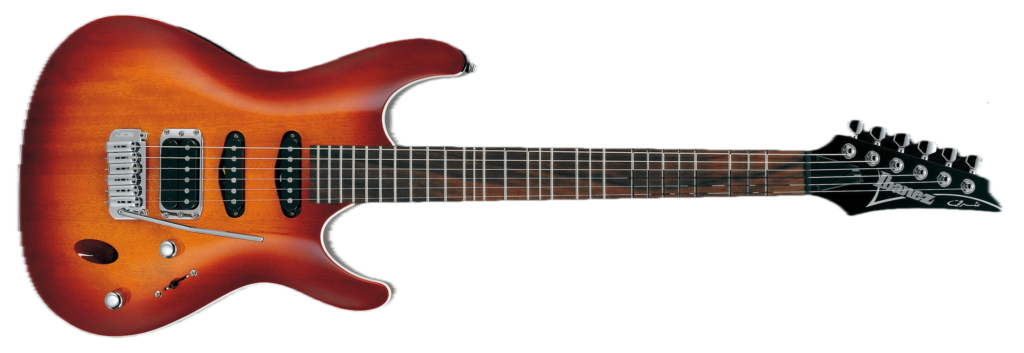
For guitarists wanting to explore Arabic music without completely abandoning the familiar fretboard, microtonal guitars offer a bridge between worlds. Kamal showed us his KMM1 – an Ibanez available in Kuwait and the United Arab Emirates that includes additional frets placed between the standard fret positions.
These extra frets allow access to the most commonly used microtonal notes in Arabic music while maintaining the standard fret positions guitarists know. You can play Western music normally, then access the half-flats and quarter tones when playing maqamat.
This hybrid approach lets guitarists explore Arabic tonalities while leveraging their existing technique. Kamal’s playing style on this instrument seamlessly blends maqam-based improvisation with modern guitar techniques, creating a unique voice that honors both traditions.
The Cultural Importance of the Oud
The oud isn’t just an instrument in Arabic culture—it’s a cultural cornerstone that brings people together. At the end of filming, additional musicians joined us, and the oud became the center of communal music-making.
This social role distinguishes the oud from how Western instruments are often used. While we might attend concerts to passively listen, the oud actively creates community. It’s the instrument around which people gather to play together, sing, dance, and celebrate.
The oud has maintained this central role for thousands of years, passing through countless generations and across vast geographic territory—from North Africa through the Middle East to Central Asia. Its influence extended to Europe, where it evolved into the lute and eventually contributed to the development of the guitar.
What Guitarists Can Learn from the Oud
Exploring the oud offers guitarists several valuable lessons:
Ear training beyond frets: The fretless fingerboard develops pitch awareness that transfers back to guitar, improving intonation and vibrato.
Microtonal awareness: Understanding that musical space exists between the half-steps we’re conditioned to hear expands compositional possibilities.
Drone-based improvisation: Improvising over a single drone note rather than changing chords encourages different melodic thinking.
Maqam as emotional journey: Thinking of modes and scales as emotional territories rather than just note collections deepens musical expression.
Touch and dynamics: The oud’s sensitivity to picking dynamics and hand pressure develops more nuanced technique.
Historical perspective: Understanding the oud’s role as guitar’s ancestor provides context for why Western harmony and scales developed as they did.
Final Thoughts
The oud represents a profound musical tradition that predates Western music theory by millennia. Its microtonal system, maqam-based improvisation, and fretless expression offer guitarists an opportunity to expand beyond the twelve-tone equal temperament system that dominates contemporary music.
For Western musicians, especially those raised exclusively on major and minor scales, the oud opens doors to new emotional territories. Those “dirty notes”—the half-flats and quarter-tones—aren’t wrong or out of tune. They’re deliberate choices that create shades of emotion unavailable in Western tuning.
The oud isn’t just an exotic instrument to dabble with—it’s a master teacher that can deepen your understanding of melody, intonation, and the relationship between technical facility and emotional expression. Whether you ever actually play an oud or simply apply some of the lessons above into your guitar playing, engaging with this ancient tradition broadens your musical vocabulary in irreversible ways.
The next time you hear those characteristic Arabic melodies, you’ll understand you’re not hearing “out of tune” playing—you’re hearing a sophisticated musical language that’s been refined over thousands of years, expressing emotions in spaces Western music leaves unexplored.