Most guitarists spend years mastering standard tuning. Tom Strahle has spent decades finding ways to escape it. As a session guitarist whose work appears in countless films, TV shows, and video games, Tom has built a career on alternate tunings that create sounds impossible to achieve with EADGBE. From pentatonic open tunings to three-string bass instruments and even a fretless 12-string banjo, his approach reveals how unconventional thinking opens new creative territory.
The Session Musician Behind the Sounds You Know
Tom Strahle has worked on an impressively diverse range of projects— from Justin Bieber and Cody Simpson songs, to major video game scores including Modern Warfare, film soundtracks, and television shows. His IMDb credits read like a testament to versatility, but what makes his work distinctive isn’t just technical skill—it’s his willingness to make the guitar sound like anything but a guitar in standard tuning.
The E Minor Pentatonic Open Tuning
Tom’s most accessible alternate tuning might be his E minor pentatonic setup. Rather than tuning to standard EADGBE, he tunes the guitar so that all open strings form an E minor pentatonic scale—one of the most common scales in popular music.
From low to high, the strings are tuned as follows:
E G A B D E
The beauty of this tuning is immediate: strum all the strings open and you get a consonant, usable sound. There’s no dissonance or “wrong” notes. Everything rings together harmoniously because you’re working within a single scale framework.
Why It Works
The pentatonic scale’s lack of half-steps means that notes naturally complement each other when played simultaneously. In standard tuning, playing multiple open strings together often creates dissonance—some notes clash rather than blend. With pentatonic tuning, every open string supports every other open string.
This creates possibilities that are unavailable in standard tuning. You can let all of the strings ring out against each other, creating rich harmonic layers with minimal effort. Fingerpicking patterns that might sound muddy or dissonant in standard tuning suddenly work beautifully.
The All-D Tuning with Drop D
One of Tom’s other popular tunings is a little surprising at first, and runs as follows:
D d d d d d d
All of the strings are tunes to the same note of D, with the low E string dropped down to a low D.
This tuning takes a simple concept to its logical extreme – with all six strings producing the same note, you create maximum resonance and harmonic reinforcement.
Tetrachords
One of the biggest benefits of this tuning for Tom is that it allows him to play tetrachords – chords formed using the first four notes of a diatonic scale.
In standard tuning, playing a clean tetrachord requires awkward fingerings and muted strings to avoid dissonance. With all of the strings tuned to D though, you have a drone foundation that supports melodic movement up the fretboard.
The tuning lends itself to both clean, open voicings and heavier, distorted playing. With gain added, the open strings create a powerful, resonant sound that works for rock and even metal contexts. Because every string is the same note, there’s no dissonance—just pure harmonic reinforcement.
Creative Discovery
One of Tom’s key insights: alternate tunings force you to discover new ideas. You might play a simple pentatonic scale pattern that sounds incredible in the alternate tuning, then realize you have to figure out how to recreate that sound on a standard-tuned guitar. The tuning becomes a compositional tool, generating ideas you wouldn’t find through conventional approaches.
The all-D tuning allows chord shapes that would be impossible in standard tuning. You can reach for intervals, play suspended sounds, and explore the upper register with patterns that reveal new voicings the higher up the neck you go—all against that constant D drone.
The Three-String Bass Guitar
One of Tom’s more unusual instruments features just three bass strings— all tuned to the note of E.
However all of these strings are in slightly different gauges (typically 46, 48, and 50) to create subtle tonal variations between the strings.
This three-string setup appeared on the Modern Warfare video game score, providing low-end texture that sits differently in the mix than standard bass guitar. The slightly varied string gauges create nuanced differences in attack and sustain—each string has its own character despite being tuned to adjacent pitches.
The setup works particularly well for adding low, rumbling texture without overwhelming other elements. Because you’re working with just three strings, the sound stays focused and controllable. You’re not dealing with the potential muddiness of a full six-string guitar in a low register.
Adding Seconds to Chords
The three-string configuration also makes it easy to add a second interval to each chord—a subtle color tone that adds complexity without creating dissonance. The loose gauge on the top string (relative to its pitch) allows for expressive bending, adding vocal-like qualities to the low-end texture.
The Cumbus: Fretless 12-String Banjo
Perhaps the most exotic instrument in Tom’s collection is the cumbus—a Turkish fretless 12-string banjo invented by Zeynel Abidin Cümbüş. As Tom jokingly described it: “Three of my least favorite things—it’s a 12-string, it’s a banjo, and it’s fretless.”
Despite this humorous assessment, the cumbus creates haunting, distinctive sounds impossible to achieve on standard instruments. The fretless nature allows for microtonal inflections and slides that give the instrument an almost vocal quality.
Middle Eastern Instrument Origins
The Cumbus belongs to the oud family of Middle Eastern instruments, though adapted with a banjo-like resonator. Tom’s introduction to Middle Eastern instruments came through a work opportunity—someone asked if he played oud for an upcoming gig six months away. Even though he didn’t know what an oud was at the time, he said yes and spent those six months learning.
That project – a computer game called Empire Earth 2 – launched Tom into a specialty that kept him working through various economic ups and downs. During COVID particularly, game scoring kept the bills paid while other music work dried up.
Creating Atmospheric Textures
The cumbus excels at creating exotic, atmospheric textures for film and game scores. Its 12 strings create natural chorus effects, while the fretless fingerboard allows for expressive pitch manipulation. The banjo-style resonator gives it projection and a distinctive timbre that cuts through mixes.
For composers looking for something that signals “foreign,” “ancient,” or “mysterious,” the Cumbus delivers instantly recognizable color without sounding like a synthesizer or sample library.
The Spider Capo Secret
One of Tom’s “big secrets” involves the spider capo—a device with individual capo pieces that can selectively capo specific strings at different frets.
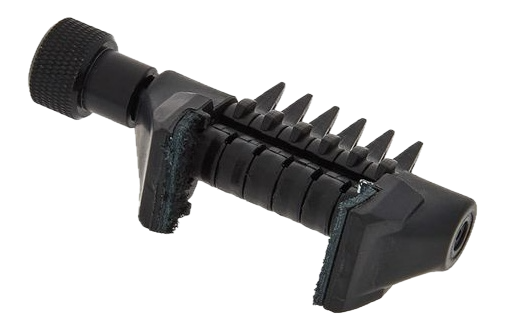
This allows for open tuning-like effects without actually retuning the guitar.
The spider capo essentially creates custom, instant alternate tunings. You can set up complex open voicings, play simple fingerings, and get sophisticated harmonic results. It’s particularly useful in studio situations where you need specific voicings but don’t have time to retune between takes.
The Justin Bieber Connection
This technique appeared on recording sessions for the song “Raise The Bar” —a track that was intended for Cody Simpson but which got reassigned to Justin Bieber after it was leaked. The spider capo allowed Tom to create unique voicings that contributed to the song’s distinctive character.
For session musicians, alternate tunings provide competitive advantages. When a producer or composer needs something specific—a texture, a vibe, a sound that doesn’t quite exist yet—having a toolkit of alternate tunings means you can deliver options others can’t.
Creating Signature Sounds
Alternate tunings help create signature sounds that make your work recognizable and valuable. When you hear Tom’s work on game scores or film soundtracks, those textures often come from tunings that other guitarists haven’t explored.
This isn’t about showing off technical skill—it’s about serving the music. Sometimes a song needs something that sounds like guitar but doesn’t sound like every other guitar part out there. Alternate tunings provide that distinction.
Getting Started with Alternate Tunings
For guitarists interested in exploring alternate tunings, Tom’s approach offers practical guidance:
Start simple: The E minor pentatonic tuning provides an accessible entry point. It’s close enough to standard tuning that you won’t feel completely lost, but different enough to spark new ideas.
Consider your strings: Having multiple strings tuned to the same note creates natural resonance and reinforcement. Look for tunings that feature these doublings.
Think about range: Sometimes going very high or very low puts you in frequency ranges where you cut through the mix and stand out from other instruments.
Use capos creatively: Spider capos or even strategic placement of regular capos can create alternate tuning effects without actually retuning.
Focus on texture: Alternate tunings excel at creating textures and atmospheres. Don’t try to play the same things you’d play in standard tuning—let the tuning suggest new approaches.
Practical Applications Beyond Session Work
While Tom’s work focuses on professional recording, alternate tunings offer benefits for all players:
Songwriters can escape familiar patterns and discover new chord progressions. When your hands don’t know what to do, creativity flows more freely.
Solo guitarists can create more complete-sounding arrangements when open strings provide constant drone notes and harmonic support.
Experimental players can explore microtonality, unusual intervals, and textures that push beyond conventional guitar sounds.
Producers and composers can layer multiple guitars in different tunings to create rich, complex textures without everything fighting for the same sonic space.
Final Thoughts
Tom Strahle’s approach to alternate tunings reveals how technical experimentation serves musical creativity. By stepping away from standard tuning, he’s created a career providing sounds that producers and composers can’t get anywhere else.
The tunings themselves aren’t secrets—anyone can tune a guitar to E minor pentatonic or Dddddd. The value comes from understanding how these tunings function, what they enable, and how they solve specific musical problems.
For guitarists feeling stuck in familiar patterns or seeking new creative directions, alternate tunings offer proven paths forward. You don’t need to abandon standard tuning entirely—think of alternate tunings as additional tools in your toolkit, ready when you need something different.
Tom’s work demonstrates that commercial success and experimental approaches aren’t opposites. The weird tunings, unusual instruments, and unconventional techniques have generated steady work across decades because they deliver sounds that serve the music.
Whether you’re scoring video games, recording pop sessions, or simply writing songs in your bedroom, alternate tunings can reveal possibilities hiding in plain sight on your familiar instrument. Sometimes you just need to turn the tuning pegs in new directions.