Hey there, guitar enthusiast!
The neck of your guitar might be the most personal component. It’s where your hand spends all its time, and small differences in shape, size, and construction can dramatically affect playability and comfort. Let’s explore what makes a great neck and how to find one that suits your playing style.
Neck Profiles
The profile refers to the shape of the back of the neck. Here are the most common profiles:
Cross-section view as seen from the headstock — shapes vary by manufacturer
C Shape
Characteristics: Moderate thickness with a curved, comfortable profile – like a “C” if viewed from the end.
Best for: Most players. It’s the most common and versatile profile for a reason.
Where you’ll find it: Most modern Fender guitars, many other brands.
My experience: The C profile is my go-to shape for most playing styles. It strikes a great balance between comfort for chording and ease of playing lead passages.
D Shape
Characteristics: Somewhat flat on the back with rounded edges, thinner than a typical C shape.
Best for: Players who prefer faster necks and technical playing.
Where you’ll find it: Many Ibanez guitars, some modern “Superstrat” designs.
My experience: D-shaped necks can be great for lead playing but might feel less comfortable for extended chord work. They’re particularly popular with shred-style players.
U Shape
Characteristics: Thicker and more rounded, filling more of your hand.
Best for: Players with larger hands or those who prefer a substantial feel.
Where you’ll find it: Some vintage Fender reissues, particularly from the 1950s.
My experience: U-shaped necks can feel wonderfully substantial. While they’re not typically as fast to play on, they can provide great stability and support, especially for players with hand issues.
V Shape
Characteristics: As the name suggests, a more pronounced V shape on the back, ranging from soft to hard V.
Best for: Thumb-over-the-top players, vintage enthusiasts.
Where you’ll find it: Vintage reissues, particularly 1950s Telecaster models.
My experience: V-shaped necks tend to be love-or-hate. They encourage a certain hand position where the thumb sits more on the side of the neck. Some players find this liberating, while others find it restrictive.
Asymmetrical Shapes
Characteristics: Different thickness or curve on bass and treble sides of the neck.
Best for: Players seeking the benefits of multiple profiles in one neck.
Where you’ll find it: Some higher-end PRS guitars, boutique builders.
My experience: These modern profiles can offer the best of both worlds—comfort for rhythm playing on one side and speed for lead on the other. They can feel strange at first but become very natural with time.
Neck Thickness
Beyond the shape, the overall thickness (often described as “depth”) of the neck matters:
Thinner necks (often called “slim” or “thin”) typically allow for faster playing and may be more comfortable for players with smaller hands.
Thicker necks provide more mass for tone and can feel more stable. Some players with hand issues find thicker necks reduce fatigue and cramping.
My experience: Neck thickness is highly personal. While conventional wisdom says thinner is faster, I’ve found necks which are too thin can actually slow me down because my hand lacks the stability of a more substantial neck. Try different thicknesses to see what works for you.
Scale Length
The scale length is the vibrating length of the string, measured from the nut to the bridge. Common scale lengths include:
24.75″ (Gibson scale)
Characteristics: Shorter scale length creates less string tension, making bending easier.
Tone impact: Tends toward warmer, thicker tone with slightly less definition on the low end.
Where you’ll find it: Gibson Les Paul, SG.
My experience: The Gibson scale length feels noticeably different—strings feel a bit looser and more pliable, making bends and vibrato easier but potentially at the cost of some definition when playing fast runs.
25.5″ (Fender scale)
Characteristics: Longer scale creates more string tension, giving strings a tighter feel.
Tone impact: Generally offers more definition and brightness, particularly in the bass frequencies.
Where you’ll find it: Fender Stratocaster, Telecaster, many other brands.
My experience: The Fender scale provides excellent clarity and note separation, which I particularly appreciate when playing complex chords. The higher tension does make string bending a bit more work, though.
Other scale lengths
24″ scale (Jaguar, Mustang): Even shorter, with very low tension. Great for smaller players or those with hand issues.
25″ scale (PRS): A compromise between Gibson and Fender scales.
Baritone scales (27″–30″): For very low tunings, providing enough tension to keep the strings from getting floppy.
Multi-scale/Fan fret: Different scale lengths for different strings, optimizing tension across the range.
Fretboard Radius
The radius refers to the curvature of the fretboard. It’s measured as the radius of the circle that would form the curve:
Vintage Fender (7.25″)
Characteristics: Pronounced curve that fits naturally under the fingers for chord playing.
Drawback: Can “fret out” (notes choking) during extreme bends on higher frets.
Where you’ll find it: Vintage Fender reissues, some Traditional series instruments.
My experience: While this radius isn’t ideal for technical lead playing, it feels wonderful for rhythm work, especially barre chords. Your hand naturally follows the curve.
Modern Fender (9.5″–12″)
Characteristics: Less curved than vintage, but still comfortable for chording.
Advantage: Better for leads and bends than a 7.25″ radius.
Where you’ll find it: Most modern Fender instruments.
My experience: This strikes a good balance for players who do both rhythm and lead playing. I find the 9.5″ radius to be particularly versatile.
Gibson (12″)
Characteristics: Flatter than traditional Fender, allowing lower action without fretting out during bends.
Where you’ll find it: Most Gibson guitars, many PRS models.
My experience: This radius works especially well for lead playing while still being comfortable for most chord work. It’s a great all-around choice for rock and blues players.
Flat/Compound (14″–20″ or variable)
Characteristics: Very flat, allowing for very low action without fretting out.
Best for: Technical players, especially those focused on fast lead playing.
Where you’ll find it: Ibanez, Jackson, Charvel, and other shred-oriented guitars.
Compound radius: Changes from curved near the nut (e.g., 10″) to flatter near the body (e.g., 16″), combining comfort for chording with performance for leads.
My experience: Extremely flat radii feel strange if you’re used to more curved boards, but they do enable very low action. Compound radius necks offer an excellent compromise and have become increasingly popular for good reason.
Neck Construction
Bolt-On
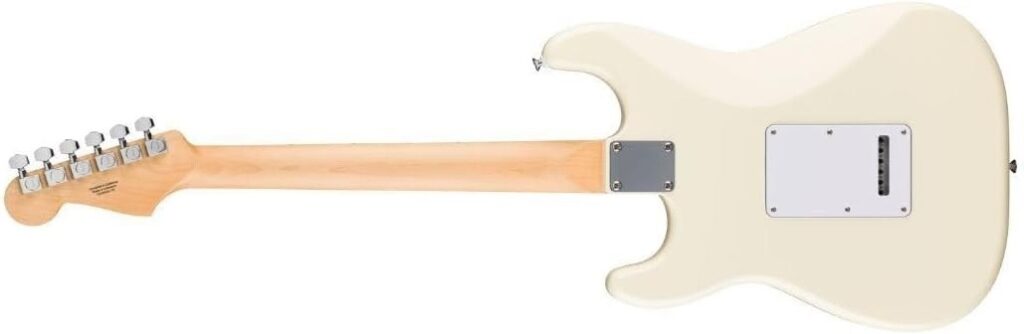
How it works: The neck is attached to the body with screws or bolts.
Tonal characteristics: Often described as having more “snap” and articulation.
Advantage: Easy to adjust or replace if needed.
Where you’ll find it: Most Fender guitars, many mass-produced instruments.
My experience: While bolt-on necks sometimes get a bad rap, they can sound fantastic. The “heel” where the neck meets the body can be bulky on some designs, potentially limiting upper fret access.
Set Neck (Glued-In)
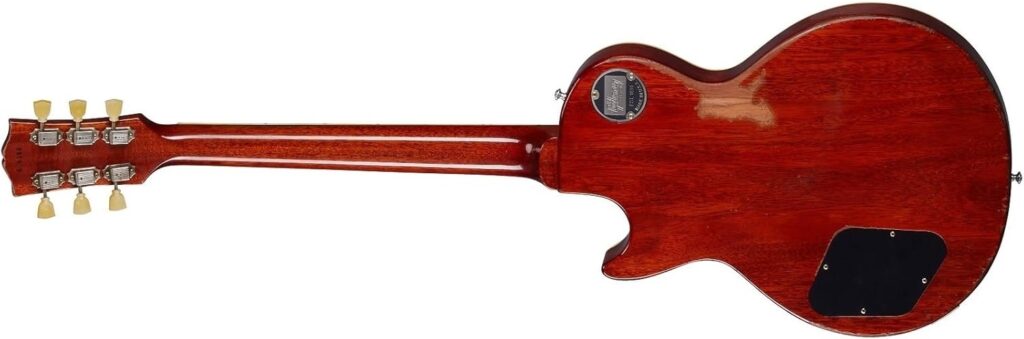
How it works: The neck is glued into a pocket in the body.
Tonal characteristics: Typically offers more sustain and a warmer overall tone.
Advantage: Seamless feel where neck meets body; better upper fret access on many designs.
Where you’ll find it: Most Gibson guitars, PRS, and many higher-end instruments.
My experience: There’s something special about the feel and tone of a good set neck. The transition between neck and body feels more organic, and there’s a certain warmth to the sound.
Neck-Through
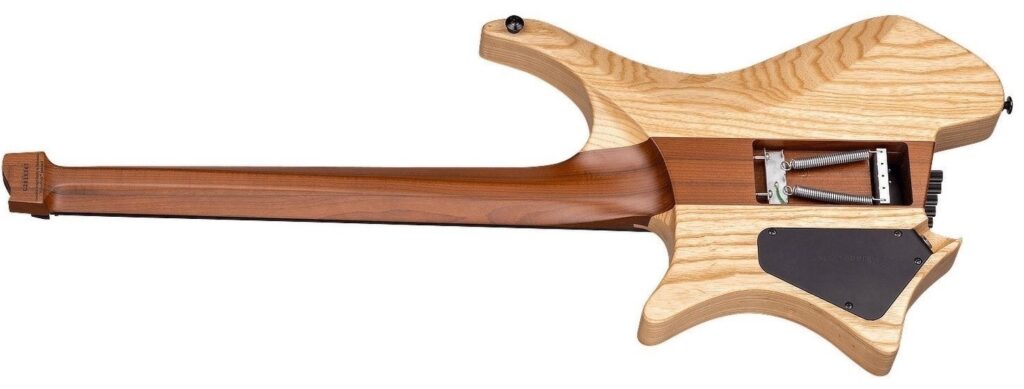
How it works: The neck extends through the entire length of the body, with body wings attached to the sides.
Tonal characteristics: Maximum sustain and resonance between neck and body.
Advantage: No heel whatsoever, offering unimpeded access to upper frets.
Where you’ll find it: Higher-end Jackson, ESP, Schecter models, and many boutique instruments.
My experience: Neck-through construction provides unparalleled upper fret access and often exceptional sustain. While more expensive to produce, it’s worth experiencing if you play a lot in the upper registers.
Fret Size
Frets come in various heights and widths, which can significantly impact playing feel:
Vintage/Narrow Frets
Characteristics: Lower, narrower frets that were standard in the 1950s and early ’60s.
Playing feel: More direct contact with the fingerboard; can feel more precise for certain techniques.
Drawback: Requires more finger pressure, can wear faster.
My experience: While I appreciate vintage-style frets on some guitars, they do require a lighter touch for intonation and can be more challenging for bending techniques.
Medium Frets
Characteristics: A good all-around size, taller and wider than vintage frets but not as extreme as jumbo.
Playing feel: Balanced between the precision of vintage frets and the ease of jumbo frets.
Where you’ll find it: Standard on many modern guitars.
My experience: Medium frets offer the best of both worlds for many players, myself included. They provide enough height for good bending and vibrato while still offering good precision.
Jumbo Frets
Characteristics: Tall, wide frets that minimize finger contact with the fingerboard itself.
Playing feel: Requires less pressure for notes to sound, makes bending easier.
Best for: Players who bend a lot, technical players seeking speed.
Where you’ll find it: Many shred-oriented guitars, some modern Fender models.
My experience: Jumbo frets can feel strange at first if you’re used to medium or vintage frets, but they do make many techniques easier and can reduce hand fatigue during long sessions.
Neck Width and String Spacing
The width of the neck at the nut and the spacing between strings affects playability in several ways:
Narrower necks (around 1.650″ at the nut) can be more comfortable for players with smaller hands and for certain chord shapes but may cause strings to feel crowded.
Wider necks (1.750″ or more at the nut) provide more space between strings, which can be beneficial for fingerstyle playing but might feel unwieldy for players with smaller hands.
My experience: This is another highly personal factor. I tend to prefer a medium width (around 1.680″–1.700″) as it provides enough space without feeling too spread out. Neck width becomes particularly important if you have unusually large or small hands.
Choosing a Neck: Decision Tree
Start with hand size and playing style:
- Do you have smaller hands? → Consider thinner profiles (slim C or D shapes) and possibly narrower widths
- Do you have larger hands? → Thicker profiles (full C or U shapes) might feel more comfortable
- Do you primarily play chords/rhythm? → More curved fretboard radius (7.25″–12″) often feels more natural
- Do you focus on lead playing/solos? → Flatter radius (12″–16″ or compound) allows lower action for fast playing
- Do you frequently play in upper positions? → Consider neck joint type (set neck or neck-through provides better access)
- Do you bend strings often? → Medium or jumbo frets make this easier
Neck Playability Checklist When Buying a Guitar
When testing a guitar’s neck, pay attention to:
- How it feels in your hand – Is it comfortable for your typical playing style?
- Fret edges – Run your hand along the side of the neck. Do you feel any sharp fret ends?
- Neck relief – Is there an appropriate amount of bow in the neck?
- Intonation – Do chords sound in tune all over the neck?
- Upper fret access – Can you comfortably reach the highest frets?
- Fret buzz – Play each string at every fret. Any excessive buzzing?
A Personal Note on Necks and Fretboards
Of all guitar specifications, neck feel is arguably the most subjective and personal. I’ve played expensive guitars with “premium” neck specs that didn’t connect with me at all, and more affordable instruments with necks that just felt right from the first moment I picked them up. If you’re interested in learning the basics about guitar types, feel free to check out my video: “Electric Guitars Types: Everything you must know“.
My best advice: try before you buy whenever possible, and spend time playing in all positions of the neck. A comfortable neck will inspire you to play more, and that’s ultimately what matters most.