The bridge is where your strings meet the body of your guitar, and its design affects everything from tuning stability to playing feel. Let’s explore the main types and help you figure out which is right for you.
Fixed Bridges
Hardtail Bridge
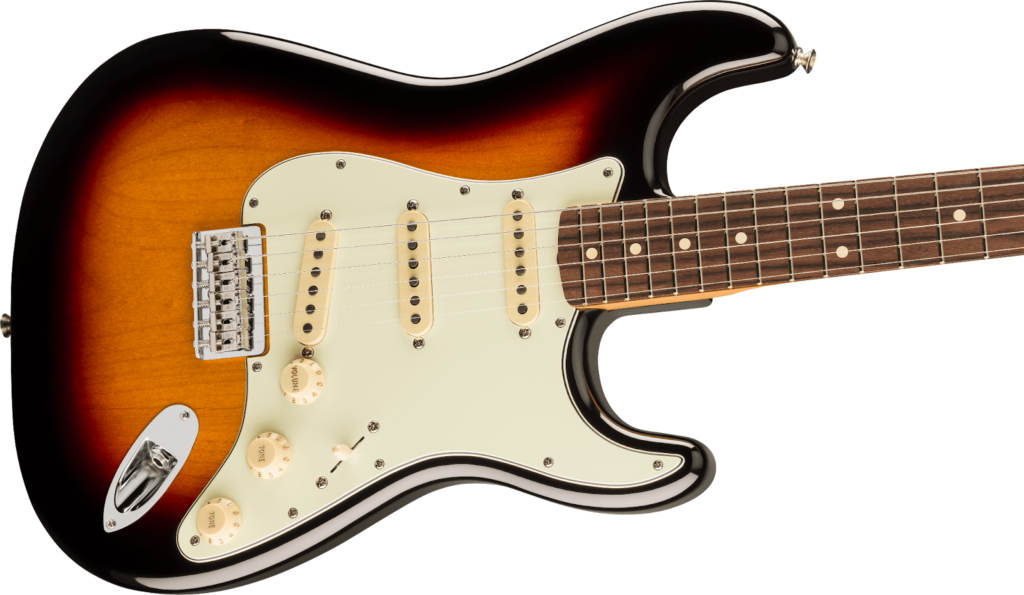
What it is: A simple, flat bridge where strings pass straight through the body or through the bridge itself.
Advantages:
- Excellent tuning stability
- Great sustain
- Simple to maintain and restring
Disadvantages:
- No vibrato/tremolo effects possible
Where you’ll find it: Many Telecasters, some Stratocaster variants, various Gibson models.
My experience: There’s something to be said for the simplicity and reliability of a hardtail bridge. When I’m recording or need absolute tuning stability, I often reach for a hardtail guitar.
Tune-O-Matic Bridge
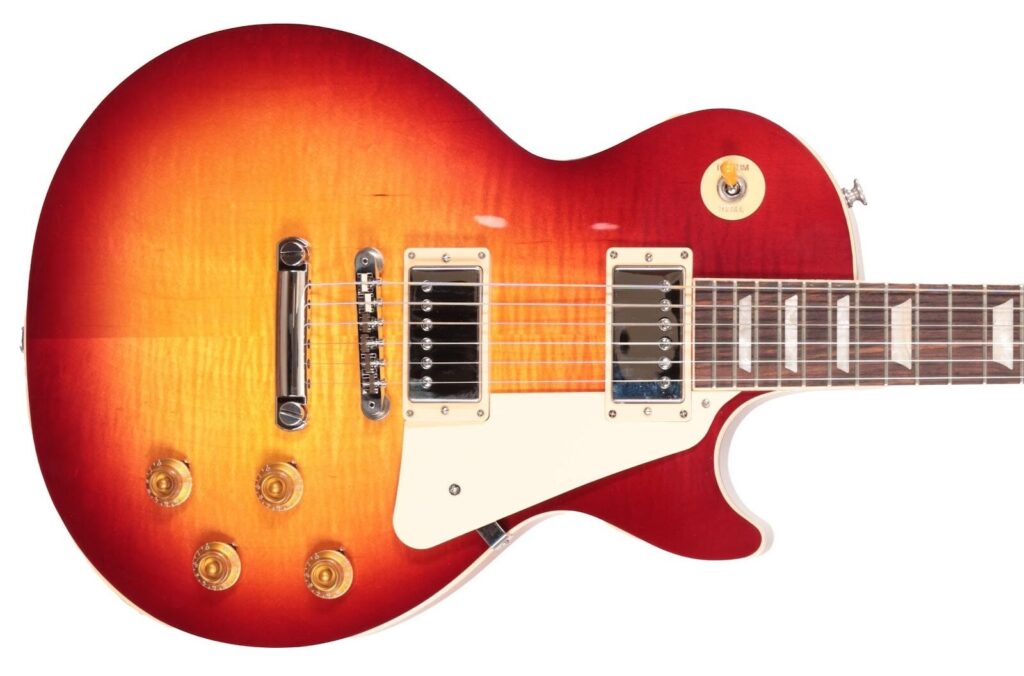
What it is: A bridge with individual saddles for precise intonation adjustment, typically paired with a stopbar tailpiece.
Advantages:
- Excellent intonation control
- Good sustain
- Simple design with few moving parts
- Solid, stable feel when playing
Disadvantages:
- No vibrato effects
- String changing can be slightly more involved than with a hardtail
Where you’ll find it: Most Gibson guitars (Les Paul, SG, ES series), many Epiphones, and other Gibson-inspired designs.
My experience: The Tune-O-Matic is a tried-and-true design that just works. The ability to precisely intonate each string individually is a major plus, and the solid coupling to the body provides great tone and sustain.
Tremolo/Vibrato Bridges
Note: While Leo Fender incorrectly called his vibrato system a “tremolo” (tremolo actually refers to volume variation), the name stuck, so you’ll see these systems referred to as both tremolo and vibrato bridges.
Vintage-Style Synchronized Tremolo
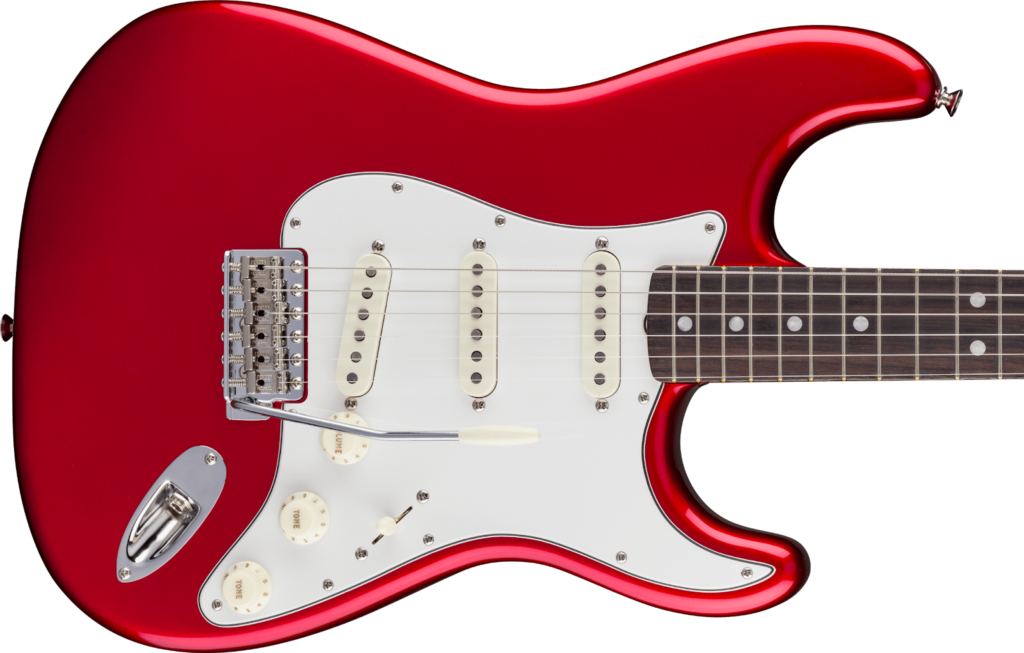
What it is: The classic Stratocaster tremolo design, with a bridge plate that pivots on six screws and uses springs in the back cavity to counter string tension.
Advantages:
- Smooth, subtle vibrato effects
- Vintage-correct look and feel
- Relatively simple maintenance
Disadvantages:
- Limited range (especially for upward pitch bends)
- Can cause tuning stability issues, especially with heavy use
- All strings go out of tune if one breaks
Where you’ll find it: Fender Stratocasters (particularly vintage-inspired models), many Strat-style guitars.
My experience: There’s a reason this design has endured for 70+ years. It provides a wonderfully musical vibrato effect for subtle expression. It’s not meant for dive bombs, but for adding a touch of emotion to chords or leads, it’s perfect.
Two-Point Synchronized Tremolo
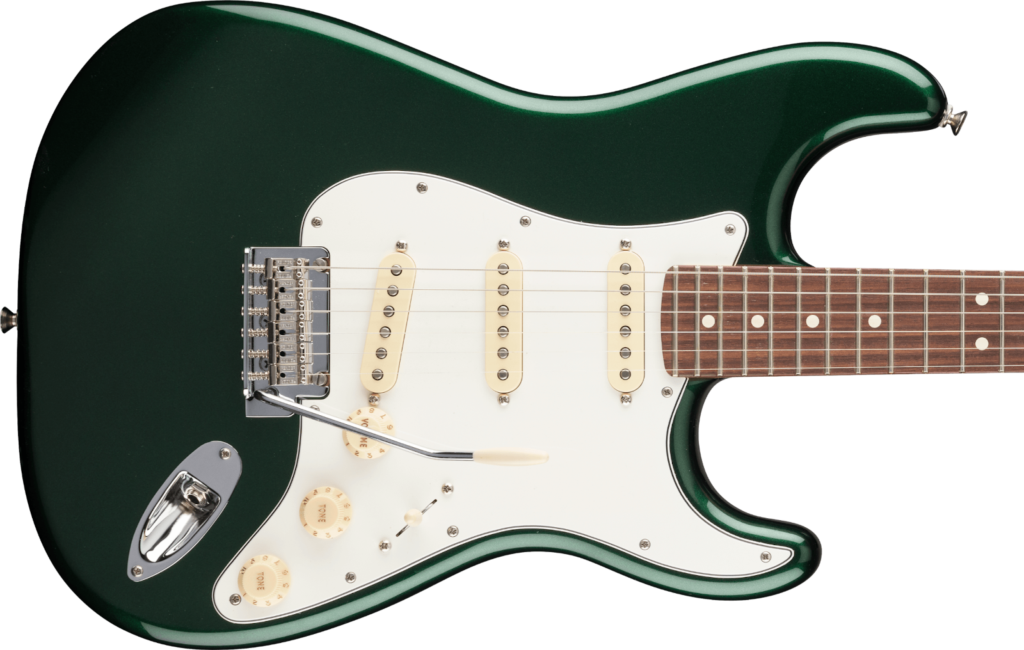
What it is: A modern evolution of the vintage tremolo, pivoting on two points instead of six screws.
Advantages:
- Better tuning stability than vintage systems
- Smoother operation
- Still provides the classic Strat vibrato feel
Disadvantages:
- Same limitations as vintage systems, but to a lesser degree
Where you’ll find it: Modern Fender Stratocasters, many contemporary Strat-style guitars.
My experience: This is my preferred tremolo system for Strat-style guitars. You get the musical qualities of the vintage system with improved stability and smoother operation.
Floyd Rose and Locking Tremolo Systems
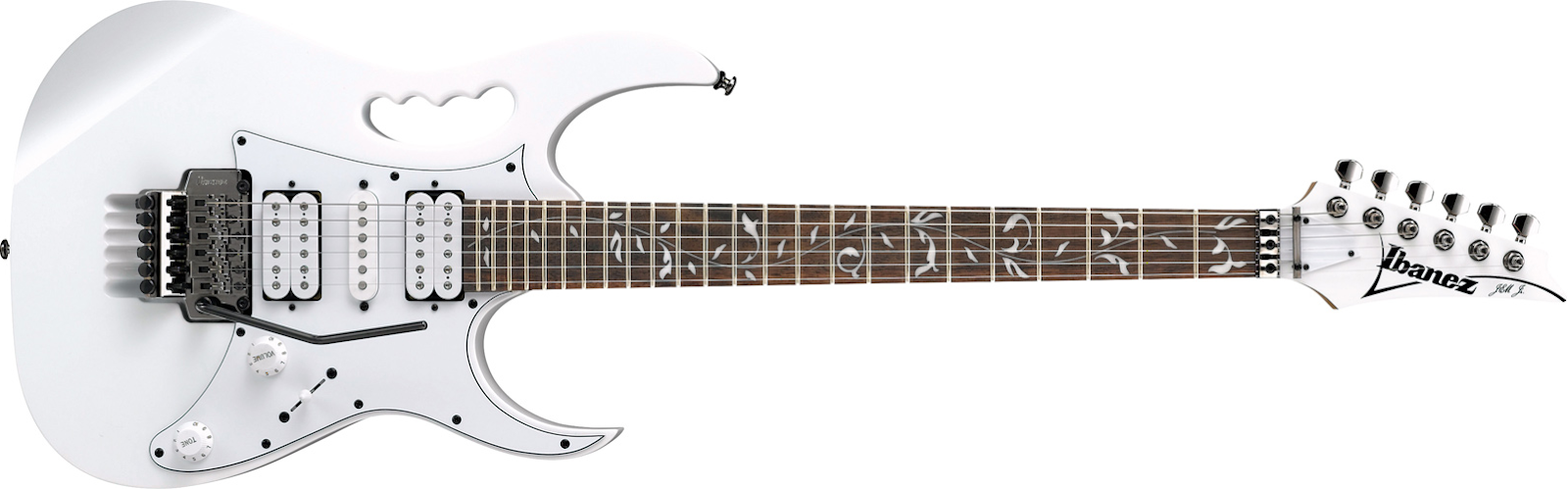
What it is: A double-locking tremolo system that clamps the strings at both the bridge and the nut.
Advantages:
- Exceptional tuning stability even with extreme use
- Wide range of pitch effects, including dramatic dive bombs and pull-ups
- Stays in tune even if a string breaks
Disadvantages:
- Complex to set up and restring
- Usually requires tools for string changes
- Changing tunings requires more work
- Can feel stiffer than non-locking systems
Where you’ll find it: Superstrats and metal-oriented guitars from brands like Ibanez, Jackson, Charvel, and ESP.
My experience: If you play styles that demand extreme whammy bar techniques, nothing else will do. That said, they’re overkill if you only use vibrato occasionally, and the setup/maintenance requirements are significantly higher.
Bigsby Vibrato
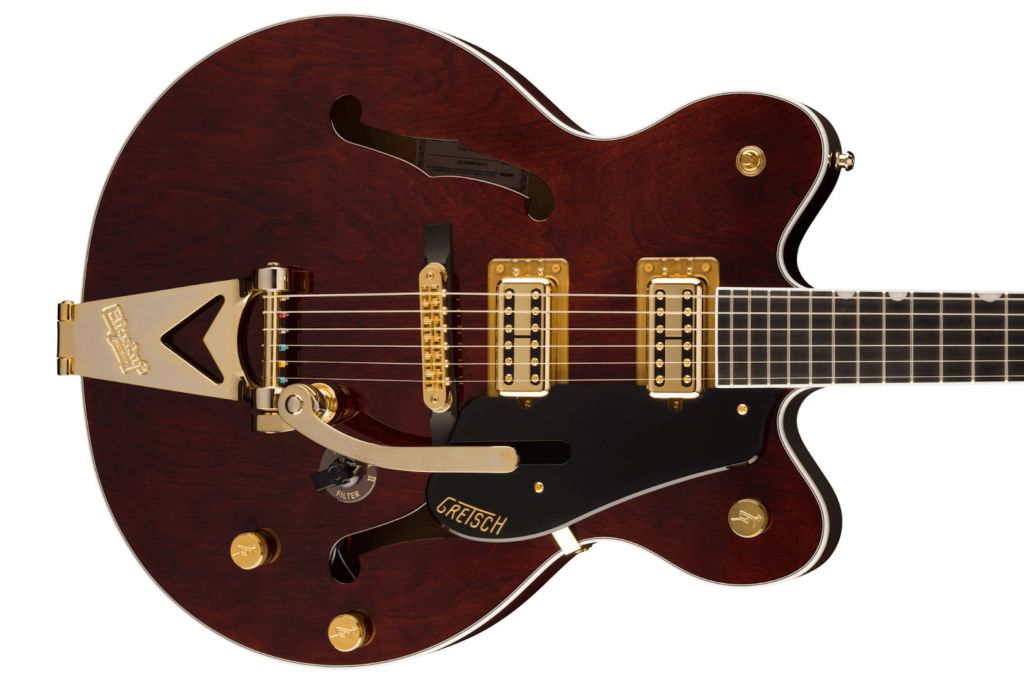
What it is: A vintage-style vibrato with a spring-loaded arm that rocks a roller to create pitch variation.
Advantages:
- Beautiful retro look
- Smooth, subtle vibrato effects
- Unique feel and character
Disadvantages:
- Limited range
- Can cause tuning issues
- More complex string changes than fixed bridges
Where you’ll find it: Many Gretsch guitars, some hollow and semi-hollow Gibson models, retro-styled solid bodies.
My experience: Bigsbys are as much about style as they are substance, but they do have a unique sound and feel. They’re perfect for rockabilly, vintage jazz, and country, adding a touch of character you can’t get from other systems.
How Bridge Types Affects Your Playing: A Practical Guide
Choose a fixed bridge if:
- Tuning stability is your top priority
- You rarely or never use vibrato effects
- You change tunings frequently
- You want maximum sustain
- You prefer simple maintenance
Choose a vintage-style tremolo if:
- You use subtle vibrato effects
- You want the classic Stratocaster feel
- You’re willing to accept some tuning compromises for expressive benefits
- You appreciate the vintage aesthetic
Choose a locking tremolo if:
- You perform extreme dive bombs and other dramatic vibrato techniques
- You use the whammy bar extensively
- You’re willing to deal with more complex setup and string changes
- Staying perfectly in tune during aggressive playing is essential
Other Important Hardware
Tuning Machines (Tuners)
Quality tuners make a huge difference in tuning stability and ease of use. Here’s what to look for:
Gear ratio: Higher ratios (like 18:1) allow for more precise tuning than lower ratios (like 14:1).
Locking tuners: These clamp the string in place, reducing slippage and making string changes faster. They’re worth the upgrade if your guitar doesn’t come with them.
Sealed vs. open: Sealed tuners are less likely to collect dust and generally last longer, but good-quality open tuners can work just as well.
My experience: Tuners are one of the most worthwhile upgrades you can make to a budget guitar. I’ve installed locking tuners on several of my guitars, and they’ve made a noticeable difference in tuning stability.
Nuts
The nut is the slotted piece at the headstock end of the fretboard where the strings pass through. Material options include:
Plastic/synthetic: Found on most budget to mid-range guitars. Works fine but can wear over time.
Bone: Traditional material with excellent tone and durability.
Graph Tech TUSQ: Engineered material designed to have bone-like tonal properties with consistent density.
Roller nuts: Reduce friction for tremolo-equipped guitars.
Locking nuts: Used with Floyd Rose systems to clamp strings in place.
My experience: A well-cut nut is crucial for good tuning stability and proper intonation. It’s often an overlooked component, but upgrading from a cheap plastic nut to bone or TUSQ can make a noticeable difference.
Strap Buttons
A small but important consideration – especially if you play standing up a lot:
Standard strap buttons: Work fine with a good strap, but straps can slip off.
Strap locks: Secure your strap to prevent accidental drops. Brands like Schaller and Dunlop make excellent systems.
My experience: After having a guitar slip off its strap once (thankfully I caught it before it hit the floor), I installed strap locks on all my performance guitars. They’re an inexpensive insurance policy against a potentially costly accident.
Bridge and Hardware Checklist When Buying a Guitar
- Does the bridge type match your playing style needs?
- If it has a tremolo, does it return to tune properly after use?
- Do the tuners turn smoothly without slipping?
- Are there any buzzes or rattles from the hardware?
- If it’s a used guitar, check for excessive wear on the saddles or nut slots
- For Floyd Rose systems, make sure the fine tuners have plenty of adjustment range left
A Personal Note on Bridges and Hardware
While I’ve played guitars with all types of bridges, I’ve developed preferences based on different playing situations. For recording, I often prefer fixed bridges for their stability and sustain. For live performances where I need vibrato effects, I’ll use a two-point tremolo or even a Floyd Rose for more aggressive styles.
My advice: Be honest about how much you’ll actually use a tremolo system. Many players are drawn to them but rarely use them in practice, in which case the potential tuning headaches might not be worth it. That said, when you want that expressive vibrato effect, nothing else will do!
If you’re interested in learning more about what my approach is to getting a perfect guitar setup at home, check out my video “The ‘5-STEP SETUP’ every guitarist should know!“.