Finding the right acoustic guitar involves balancing your budget with your needs and preferences. In this section, I’ll offer recommendations at different price points and share practical advice for the buying process.
Budget Range Recommendations ($200 – $400)
For acoustic guitars in the $200-$400 range, you can find some excellent options that offer solid playability and good tone for beginners and intermediate players alike.
Key things to look for in this price range:
- Solid Top: A solid wood top (typically spruce or mahogany) is a significant upgrade over a laminate top. It resonates more freely and will improve in tone as it ages.
- Playability: Look for a comfortable neck profile and good action (how high the strings are off the fretboard). Brands like Yamaha and Fender are generally good at producing guitars that are easy to play right out of the box.
- Brand Reputation: Stick to well-known brands like Yamaha, Fender, Ibanez, and Gretsch. They have a proven track record for quality control and reliability in this price segment.
- Body Shape: Dreadnoughts are popular for their loud, full sound, while concert or grand concert bodies offer a more balanced tone and are often more comfortable for smaller players or fingerstyle guitarists.
- Acoustic-Electric vs. Acoustic Only: Decide if you need the ability to plug in. Acoustic-electric models will be at the higher end of your budget.
Here are some strong recommendations from reputable brands:
Under $250
- Yamaha FG800/FS800 Series: These are consistently top-rated for their value. They often feature a solid spruce top, which provides a rich, resonant tone that improves with age. They are known for their superb build quality and playability. The FG800 is a dreadnought size, while the FS800 is a concert size, offering a slightly smaller body.
- Price Range: Typically around $230-$250.
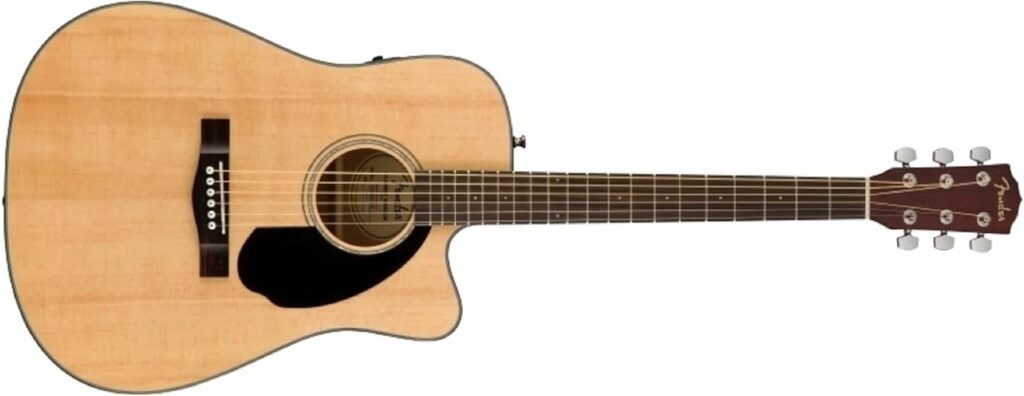
- Fender CD-60S: Another popular choice, especially the all-mahogany version, for its warm, balanced tone and easy playability. It often comes with a solid top (either spruce or mahogany depending on the model).
- Price Range: Around $200.
- Ibanez AW54OPN Artwood Acoustic Guitar: Known for its open-pore natural finish that allows the mahogany body to resonate well, providing warm and balanced tones.
- Price Range: Around $250.
- Ibanez TCY10E Talman Cutaway Acoustic-Electric Guitar: If you’re looking for an acoustic-electric within this budget, the Talman series offers a comfortable, thinner body with built-in electronics for plugging into an amp.
- Price Range: Around $250.
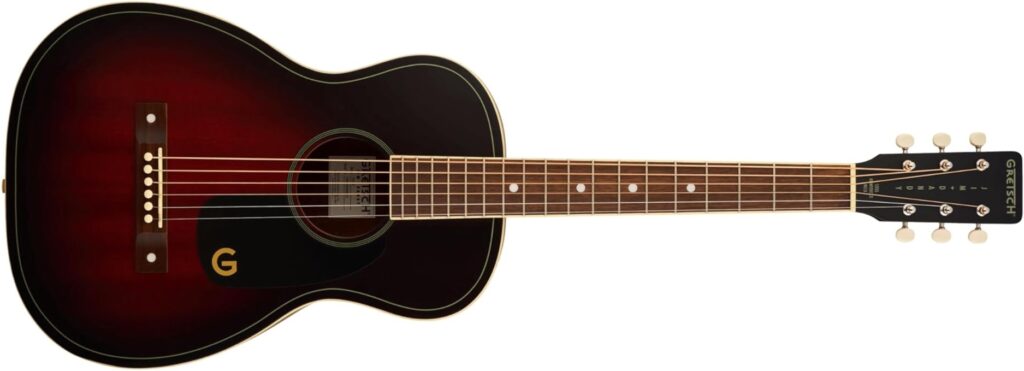
- Gretsch Jim Dandy Series: These are smaller, parlor-style guitars known for their vintage aesthetic and bright, punchy tone, great for blues, folk, or casual playing. They are often very affordable.
Price Range: Around $170-$280, with some models (like the Deltoluxe Parlor Acoustic-electric) hitting the higher end of this sub-range.
$250 – $400
- Yamaha FG830/FS830 Series: Stepping up from the 800 series, these models offer a solid spruce top with rosewood back and sides (or similar tonewoods), which adds to the depth and complexity of the tone. They are still fantastic value for the quality.
- Price Range: Around $370-$380.
- Yamaha FGX800C/FSX800C: These are acoustic-electric versions of the FG800 and FS800, offering built-in electronics and a cutaway for easier access to higher frets, making them suitable for performing or recording.
- Price Range: Around $370-$380.
- Orangewood Brooklyn Grand Concert Acoustic Guitar: Orangewood is a direct-to-consumer brand known for offering good value. The Brooklyn Grand Concert often features a solid Sitka spruce top and laminated Pau Ferro back/sides, with a comfortable grand concert body shape. Some models may even come with a pickup.
- Price Range: Around $345.
- Ibanez AC340 Grand Concert Acoustic Guitar: This model typically features a solid mahogany top for a warm, rich sound, and a comfortable grand concert body shape.
- Price Range: Around $350.
- Fender CD-60SCE: This is the acoustic-electric version of the CD-60S, adding a cutaway and built-in electronics, giving you more versatility for amplified playing.
Price Range: Around $330-$350.
Before purchasing, it’s always a good idea to try out different models in person if possible to see what feels and sounds best to you. You can see my thoughts on some budget guitars in my video “How bad are cheap guitars? // I tested 4 affordable models”.
Intermediate ($400-$900)
Moving into the $400-$900 range for acoustic guitars opens up a world of significantly improved craftsmanship, tonewoods, and features.
This is where you’ll find guitars that not only sound great but also offer a more refined playing experience, making them excellent choices for intermediate players looking to upgrade or serious beginners investing in their long-term musical journey.
Key Features to Look for in this Range:
- All-Solid Wood Construction (or at least Solid Top/Solid Back): While many guitars in the $400-$600 range will still feature solid tops with laminated back and sides, as you approach the $700-$900 mark, you’ll start to see more all-solid wood options. This is a game-changer for tone, resonance, and sustain, as the entire guitar body can vibrate and mature as the wood ages.
- Solid Spruce Top (Sitka, Engelmann, Adirondack): Spruce remains a popular choice for its clarity, projection, and dynamic range.
- Solid Mahogany Back & Sides: Offers a warm, punchy, and direct tone with good midrange.
- Solid Rosewood Back & Sides: Known for rich overtones, strong bass, and sparkling trebles, providing a more complex and “scooped” sound.
- Quality Electronics (Acoustic-Electric Models): If you plan to play live or record, look for guitars with reputable pickup systems like Fishman, LR Baggs, or Taylor’s ES-B or ES2. These will offer a much more natural and versatile amplified sound than cheaper systems.
- Improved Hardware: Better tuners (e.g., Grover, open-gear tuners), bone nut and saddle (for improved sustain and tone), and more consistent fretwork.
- Playability: Necks with a comfortable profile, consistent fret leveling, and good action will make a big difference in how enjoyable and easy the guitar is to play for extended periods.
- Bracing: More refined bracing patterns (like scalloped X-bracing) can allow the top to vibrate more freely, enhancing resonance and volume.
Here are some strong recommendations and key features to look for in this price bracket:
$400 – $650 Range
- Yamaha FG/FSX Series (FGX830C, FGX820C): While we mentioned the 800 series for beginners, the higher-end Yamaha FG/FSX models in this range are still incredible value. The FGX830C (dreadnought, cutaway, acoustic-electric) with its solid spruce top and rosewood laminate back/sides offers a rich, balanced tone and reliable electronics. The FGX820C often comes with a solid mahogany top for a warmer sound.
- Why they’re great: Excellent build quality, consistent playability, and reliable tone for the price.
- Seagull S6 Original (or S6 Original QIT Acoustic-Electric): A perennial favorite in this range, known for its unique “slim” headstock (which helps with tuning stability) and warm, responsive tone. They often feature a solid cedar top (which breaks in quickly for a warm, “played-in” sound) and laminate wild cherry back and sides. The QIT versions include a good quality Fishman preamp.
- Why they’re great: Unique tone (especially for fingerstyle), excellent playability, and environmentally friendly sourced woods (Godin, the parent company, is based in Canada).
- Alvarez Artist Series (e.g., AD60, AF60CE, MD60BG): Alvarez consistently offers fantastic guitars in this price range, often pushing into solid back territory. The AD60 (dreadnought) and AF60CE (folk, cutaway, acoustic-electric) often feature solid Sitka spruce tops and mahogany back/sides, with good attention to detail and construction. The MD60BG (Masterworks Dreadnought) is particularly noteworthy, sometimes having a solid mahogany back for well under $1000.
- Why they’re great: Great tone, strong projection, often feature forward-shifted scalloped bracing for enhanced resonance, and consistent quality.
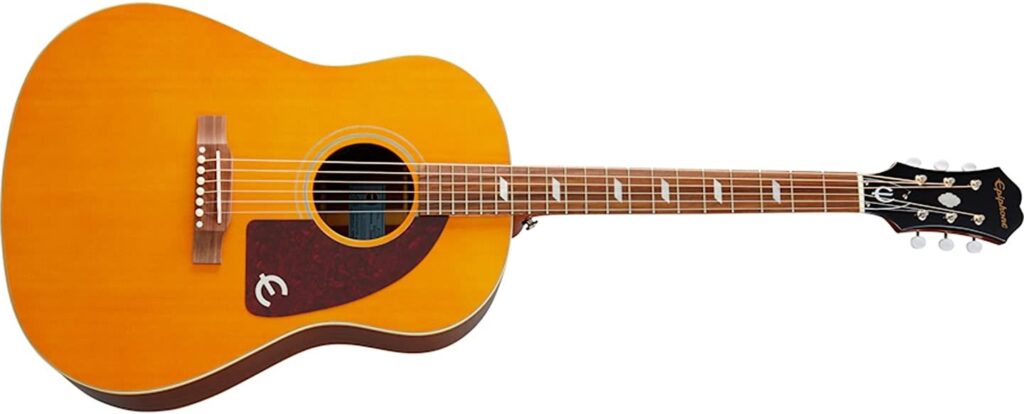
- Epiphone Masterbilt Series (e.g., Masterbilt Texan, Masterbilt AJ-45ME): Epiphone’s Masterbilt line stands out from their more budget-oriented models. They focus on all-solid wood construction, often paying homage to classic Gibson designs (like the Texan, inspired by Paul McCartney’s guitar). These will typically feature a solid spruce top and solid mahogany back/sides, delivering a rich, vintage-inspired tone.
- Why they’re great: All-solid wood construction for a truly resonant instrument, often come with quality electronics.
- Guild A-20 Bob Marley Dreadnought Acoustic Guitar: While a signature model, this Guild offers a solid spruce top with mahogany back and sides at a very attractive price point. Guild is known for their quality acoustics, and this model delivers classic dreadnought punch and warmth.
- Why it’s great: Solid top, good playability, and classic Guild tone, especially if you’re a fan of dreadnoughts.
$650 – $900 Range
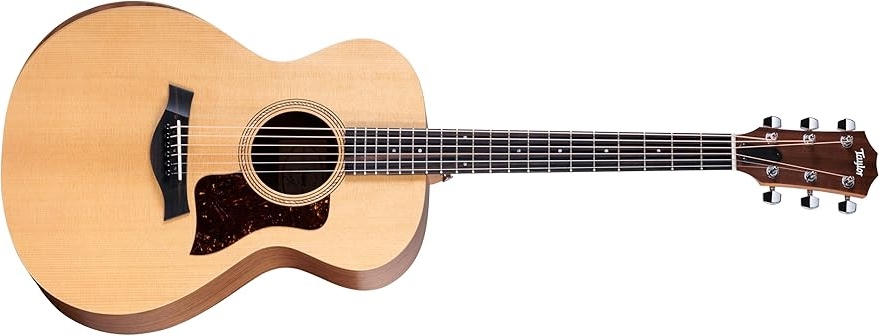
- Taylor Academy Series (e.g., Academy 10e, Academy 12e): Taylor’s entry-level “Academy” series is designed with comfort and playability in mind. They feature a solid Sitka spruce top, layered (laminate) sapele back and sides, and a built-in armrest for enhanced comfort. The “e” models include Taylor’s ES-B electronics with a built-in tuner. The 10e is a dreadnought, and the 12e is a grand concert, offering a more comfortable, smaller body.
- Why they’re great: Exceptional playability (low action out of the box), renowned Taylor tone, and comfortable design, perfect for those stepping up.
- Martin X Series (e.g., 000-X2E, D-X2E): Martin’s X Series brings the legendary Martin tone to a more accessible price point. These guitars typically feature a solid Sitka spruce top with HPL (High-Pressure Laminate) back and sides. While not all-solid, the HPL is very durable and still produces a respectable tone, especially combined with a solid top and Martin’s bracing. They often include Fishman MX electronics.
- Why they’re great: Authentic Martin tone, durable construction, and reliable electronics.
- Eastman Guitars (e.g., E1D, E1OM): Eastman is a fantastic brand often praised for offering “boutique” quality at an intermediate price. They are known for all-solid wood construction even in their entry-level models within this range. The E1D (dreadnought) and E1OM (orchestra model) typically feature solid Sitka spruce tops with solid sapele back and sides.
- Why they’re great: Exceptional all-solid wood tone and resonance for the price, often compared favorably to much more expensive guitars. Hand-crafted feel.
- Takamine G Series (e.g., GN93CE, GD93CE): Takamine’s higher-end G Series guitars offer beautiful aesthetics, excellent playability, and very good electronics. Models like the GN93CE (NEX body, cutaway, acoustic-electric) or GD93CE (dreadnought, cutaway, acoustic-electric) often feature solid spruce tops and three-piece rosewood/quilted maple backs for a distinctive look and balanced tone. Their preamps are often quite advanced for the price.
- Why they’re great: Great amplified sound, comfortable necks, and attractive designs.
- Cordoba C7 (Classical Guitar): If you’re looking for an intermediate nylon string acoustic, the Cordoba C7 is a highly regarded option. It typically features a solid cedar or spruce top with rosewood back and sides, offering a warm, clear, and resonant classical tone.
Why it’s great: Excellent value for a traditional classical guitar, great for fingerstyle and classical repertoire.
Important Considerations:
- Try Before You Buy: If at all possible, visit a local music store and play several of these guitars. The feel of the neck, the body size, and the subtle tonal differences can be very personal.
- Acoustic vs. Acoustic-Electric: Decide if you need the ability to plug in. Acoustic-electric models will be at the higher end of the range.
- Body Shape: Dreadnoughts offer strong volume and bass, Grand Concert/OM/Auditorium models are more balanced and comfortable for fingerstyle or smaller players, and Jumbos are very loud and resonant.
- Tonewoods: Research the tonal properties of different woods (spruce, cedar, mahogany, rosewood, sapele, maple, etc.) to match your preferred sound.
- Setup: Even great guitars can benefit from a professional setup after purchase to optimize action and intonation for your playing style.
This price range is a sweet spot for finding a truly rewarding acoustic guitar that can last you for many years of playing and growing as a musician.
Professional ($900-$2000)
Stepping into the $900-$2000 range for acoustic guitars is where you start to find truly professional-grade instruments. These guitars often boast all-solid wood construction, premium hardware, more refined craftsmanship, and superior electronics, delivering rich, complex tones and exceptional playability that will satisfy discerning players and stand up to rigorous gigging and recording demands.
Key Features to Expect in this Range:
- All-Solid Tonewoods: This is the hallmark of this price point. You’ll consistently find solid spruce (Sitka, Adirondack, Engelmann) tops paired with solid mahogany, sapele, or rosewood backs and sides. This allows the guitar to resonate more fully and develop a richer, more open tone over time.
- High-Quality Electronics: For acoustic-electric models, expect sophisticated pickup and preamp systems from renowned brands like LR Baggs, Fishman Aura, or proprietary systems like Taylor’s Expression System 2 (ES2) or Martin’s Fishman MX-T. These systems aim to faithfully reproduce the guitar’s natural acoustic tone when amplified.
- Superior Craftsmanship and Appointments: Impeccable fretwork, often hand-finished or precision-machined, ensuring smooth playability and easy bending. Bone nut and saddle are standard for optimal sustain and intonation. More intricate binding, inlays, and higher-quality finishes (often thin nitrocellulose lacquer or UV-cured polyester) are common.
- Refined Bracing: Advanced bracing patterns (e.g., scalloped X-bracing, V-Class bracing) are designed to maximize resonance, projection, and sustain while maintaining structural integrity.
- Comfort and Playability: Necks with well-thought-out profiles, often with a satin finish for smooth movement, and consistently low, buzz-free action right out of the factory (though a personalized setup is always recommended).
Brands to Prioritize:
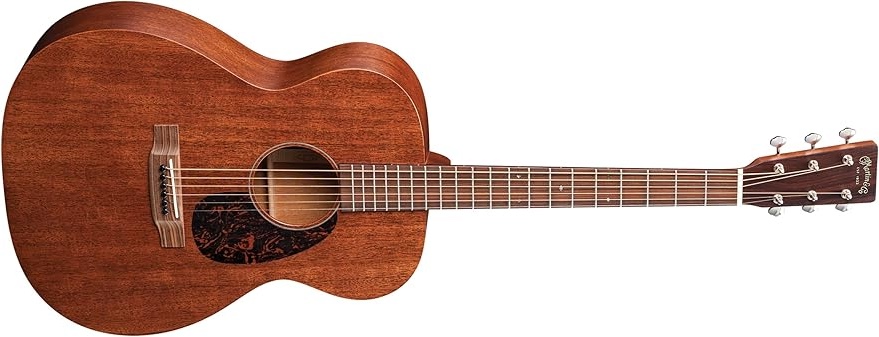
- Martin (Road Series, some 15 Series, D-10/000-10): Martin’s legacy is built on its iconic acoustic tone. In this range, you’re looking at their Road Series (e.g., DRS1, GPC-11E, D-12E, 000-13E). These are often all-solid wood (some with solid tops/laminate back and sides, so check specific models) and come with Fishman electronics. The 15 Series (e.g., 000-15M, D-15M) are all-solid mahogany and produce a warm, earthy, woody tone. The D-10E and 000-10E are also excellent options with solid sapele construction and Fishman MX-T electronics.
- Strengths: Classic Martin tone, strong low end, excellent for strumming and traditional folk/country. Durable and reliable.
- Taylor (300 Series, some American Dream Series): Taylor is renowned for its consistent quality, playability, and brighter, more articulate tone. The 300 Series (e.g., 314ce, 310ce, 324ce) are all-solid wood (often Sitka spruce with sapele/blackwood, or all-mahogany/Tasmanian blackwood for the “320” models) and feature Taylor’s excellent ES2 electronics. You might find some of the American Dream Series (e.g., AD17) which offer solid wood construction and a more stripped-down aesthetic for value.
- Strengths: Superb playability, comfortable necks, clear and balanced tone, excellent amplified sound with ES2, great for fingerstyle and modern playing.
- Eastman Guitars (E6, E8, E10, E20 series, some E40/E45): Eastman is celebrated for providing vintage-inspired, all-solid wood guitars at highly competitive prices. Their E6 (Mahogany) and E8 (Rosewood) series (with Sitka spruce tops) and E10 (Mahogany) and E20 (Rosewood) series (with Adirondack spruce tops) are all excellent choices. They often feature hand-scalloped bracing and nitrocellulose finishes.
- Strengths: All-solid wood construction, fantastic tone and resonance, vintage vibe, incredible value, often compared to Martins and Gibsons costing much more.
- Breedlove Organic Collection (and some Pursuit Exotic): Breedlove offers innovative designs and a strong focus on sustainably sourced woods. The Organic Collection (e.g., Wildwood, Pursuit Exotic, Solo Pro) often features all-solid wood construction (e.g., all-mahogany, spruce/myrtlewood) and well-integrated electronics. Their unique Bridge Truss System also contributes to resonance.
- Strengths: Unique aesthetics, comfortable body shapes, great tonal variety, often focus on sustainable tonewoods, good electronics.
- Guild (some D/OM-140/150/240 models): Guild offers robust, well-built guitars with a classic American sound. In this range, you’ll find their higher-end imports (often the D-140/150 or OM-140/150 series) with solid spruce tops and solid mahogany or rosewood back and sides. They offer a powerful, resonant tone, especially their dreadnoughts.
Strengths: Big, bold sound (especially dreadnoughts), vintage vibe, sturdy build.
Important Considerations:
- Try Before You Buy: If at all possible, visit a local music store and play several of these guitars. The feel of the neck, the body size, and the subtle tonal differences can be very personal.
- Acoustic vs. Acoustic-Electric: Decide if you need the ability to plug in. Acoustic-electric models will be at the higher end of the range.
- Body Shape: Dreadnoughts offer strong volume and bass, Grand Concert/OM/Auditorium models are more balanced and comfortable for fingerstyle or smaller players, and Jumbos are very loud and resonant.
- Tonewoods: Research the tonal properties of different woods (spruce, cedar, mahogany, rosewood, sapele, maple, etc.) to match your preferred sound.
- Setup: Even great guitars can benefit from a professional setup after purchase to optimize action and intonation for your playing style.
In this price range, buying a used guitar can significantly increase the quality you get for your money. A used Martin Standard Series (e.g., D-18, 000-18) or Taylor 400 Series, or even a higher-end Larrivée, could potentially fall within your budget.
Always inspect used guitars carefully or buy from reputable dealers. This budget allows you to invest in a truly exceptional instrument that will inspire you for years and perform reliably in any professional setting.
Premium ($2000+)
When you move into the $2000+ price range for acoustic guitars, you’re entering the realm of truly exceptional instruments. These are often considered “lifetime guitars” for many players, offering unparalleled tone, craftsmanship, and playability. This segment is dominated by iconic brands and, as you go higher, increasingly by smaller, boutique builders known for their meticulous attention to detail and unique voicing.
Key Features to Expect in this Range:
- Master-Grade Tonewoods: Expect the highest quality, most resonant cuts of wood, often with beautiful figuring. This includes premium Sitka, Adirondack, or Engelmann spruce tops, paired with exquisite solid Indian rosewood, mahogany, koa, or even more exotic woods like cocobolo, ziricote, or Madagascar rosewood for the back and sides. These woods are carefully selected and aged for optimal tonal properties.
- All-Solid Wood Construction: This is standard. Every part of the guitar that influences tone – top, back, and sides – will be solid wood, allowing for maximum resonance, sustain, and tonal complexity that continues to develop as the guitar ages and is played.
- Precision Craftsmanship: Flawless fretwork, often hand-finished or utilizing advanced Plek machines for perfect leveling. Impeccable binding, purfling, and rosette work. Dovetail or bolt-on necks that offer incredible stability and sustain. Every detail is executed with precision.
- Advanced Bracing Patterns: Whether it’s Martin’s forward-shifted scalloped X-bracing, Taylor’s V-Class bracing, or proprietary designs from other builders, these guitars employ highly refined bracing systems to optimize the top’s vibration, enhancing volume, sustain, and overtone content.
- Top-Tier Hardware and Appointments: High-ratio tuners (e.g., Gotoh 510, Waverly) for precise tuning stability. Bone or Tusq nuts and saddles are standard, often compensated for perfect intonation. High-quality finishes (often thin nitrocellulose lacquer) that allow the wood to breathe and resonate.
- Sophisticated Electronics (Acoustic-Electric Models): Integrated, high-fidelity pickup and preamp systems designed to capture the nuanced acoustic tone. Examples include LR Baggs Anthem, Fishman Aura, or Taylor’s ES2, offering studio-quality amplified sound.
- Exceptional Playability: These guitars are set up to play effortlessly, with comfortable neck profiles and consistently low action, making complex chords and intricate leads a joy to execute.
Iconic Brands & Series:
- Martin (Standard Series, some Modern Deluxe Series):
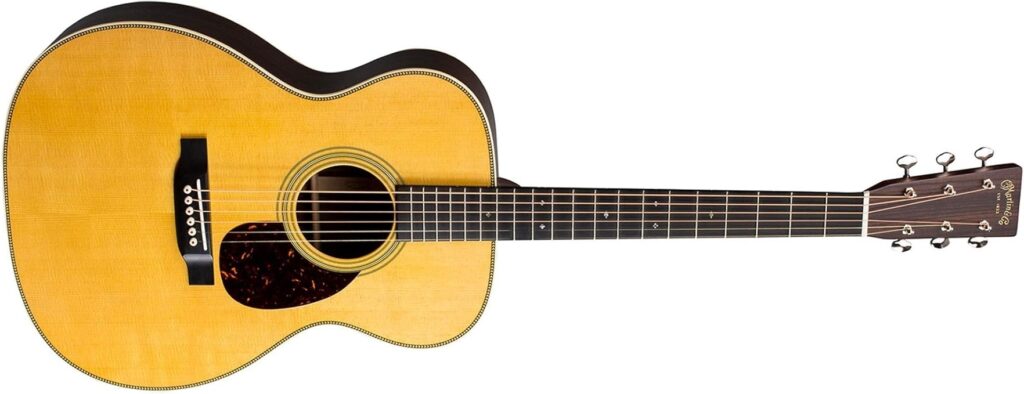
- D-28 / HD-28 / D-18 / 000-18 / OM-28: These are the benchmarks. The D-28 and HD-28 (spruce/rosewood dreadnoughts) are legendary for their powerful, balanced tone, deep bass, and shimmering highs, ideal for strumming and flatpicking. The D-18 (spruce/mahogany dreadnought) offers a drier, more direct tone with strong mids, a favorite for bluegrass. The 000-18 and OM-28 offer more balanced, articulate tones in smaller, more comfortable body sizes, excelling at fingerstyle and vocal accompaniment.
- Price Range: Typically start around $2,800 – $3,500 for Standard Series, going much higher for vintage or custom shop models.
- Martin 15 Series (000-15M StreetMaster, D-15M StreetMaster): While the base 15 Series can fall under $1500, the “StreetMaster” versions often edge into this range, offering an all-mahogany construction with a unique worn finish and a warm, woody, bluesy tone.
- Price Range: Around $1,800.
- Strengths: Rich history, deep resonant tone, excellent for traditional genres, incredible projection.
- D-28 / HD-28 / D-18 / 000-18 / OM-28: These are the benchmarks. The D-28 and HD-28 (spruce/rosewood dreadnoughts) are legendary for their powerful, balanced tone, deep bass, and shimmering highs, ideal for strumming and flatpicking. The D-18 (spruce/mahogany dreadnought) offers a drier, more direct tone with strong mids, a favorite for bluegrass. The 000-18 and OM-28 offer more balanced, articulate tones in smaller, more comfortable body sizes, excelling at fingerstyle and vocal accompaniment.
- Taylor (600 Series, 700 Series, 800 Series, 900 Series, Koa Series, Builder’s Edition):
- Taylor 814ce: Often considered the flagship of the Taylor line for good reason. It’s a Grand Auditorium body with a solid Sitka spruce top and solid Indian rosewood back and sides, featuring Taylor’s innovative V-Class bracing and ES2 electronics. It offers incredible versatility, equally adept at strumming, fingerstyle, and lead work.
- Price Range: Starts around $3,500 – $4,000 for the 814ce, moving up to $5,000+ for 900 Series and Builder’s Editions.
- Taylor 614ce (Maple), 714ce (Lutz Spruce/Rosewood), Koa Series: These offer different tonal palettes and aesthetic appointments while maintaining Taylor’s signature playability and clear, articulate sound.
- Strengths: Superb playability (consistent neck profiles, low action), clear and balanced tone, excellent intonation, cutting-edge electronics, and modern aesthetics.
- Taylor 814ce: Often considered the flagship of the Taylor line for good reason. It’s a Grand Auditorium body with a solid Sitka spruce top and solid Indian rosewood back and sides, featuring Taylor’s innovative V-Class bracing and ES2 electronics. It offers incredible versatility, equally adept at strumming, fingerstyle, and lead work.
- Gibson (J-45 Standard, Hummingbird, Songwriter):
- Gibson J-45 Standard (“The Workhorse”): An iconic slope-shoulder dreadnought with a solid Sitka spruce top and solid mahogany back and sides. Known for its warm, woody, “thumpy” tone, strong midrange, and excellent blend with vocals. A favorite of singer-songwriters.
- Price Range: Around $2,800 – $3,500.
- Gibson Hummingbird: A square-shoulder dreadnought with solid Sitka spruce and solid mahogany, famous for its elaborate pickguard and a slightly brighter, more articulate sound than the J-45, while still retaining that classic Gibson warmth.
- Price Range: Around $3,500+.
- Strengths: Distinctive “round” or “woody” tone, great for rhythm and vocal accompaniment, iconic status, unique Gibson feel.
- Gibson J-45 Standard (“The Workhorse”): An iconic slope-shoulder dreadnought with a solid Sitka spruce top and solid mahogany back and sides. Known for its warm, woody, “thumpy” tone, strong midrange, and excellent blend with vocals. A favorite of singer-songwriters.
- Larrivée (all models, especially 40 Series and up):
- Larrivée offers exceptional value in all-solid wood, Canadian-made guitars. The 40 Series and higher (e.g., L-40, OM-40, D-40) often feature their “Scalloped Parabolic” bracing, providing a balanced, clear, and articulate tone with excellent projection. You’ll find a range of tonewood combinations (spruce/mahogany, spruce/rosewood).
- Price Range: Starts around $1,800 – $2,500, with higher series going up from there.
- Strengths: All-solid construction at highly competitive prices, balanced tone, superb craftsmanship, great for fingerstyle and articulate playing.
- Collings / Santa Cruz / Bourgeois / Huss & Dalton / Froggy Bottom (Boutique Brands):
- These American boutique builders are renowned for their meticulous, often hand-built quality, obsessive attention to detail, and unique voicings. They often draw inspiration from vintage Martins and Gibsons but add their own refined touches. Expect incredible responsiveness, rich overtones, and fantastic projection.
- Price Range: Typically start around $4,000 – $5,000+ and can easily go upwards of $10,000, depending on wood choices and customization.
- Strengths: “Hand-voiced” sound, often considered superior to production models, incredible sustain and clarity, heirloom quality, unique aesthetic options.
- These American boutique builders are renowned for their meticulous, often hand-built quality, obsessive attention to detail, and unique voicings. They often draw inspiration from vintage Martins and Gibsons but add their own refined touches. Expect incredible responsiveness, rich overtones, and fantastic projection.
- Lowden / Furch (European Boutique Brands):
- Lowden: From Northern Ireland, Lowden guitars are known for their unique “A-frame” bracing, larger body sizes, and a very open, resonant, almost “airy” tone, particularly favored by fingerstyle players. They often use unique tonewood combinations.
- Price Range: Typically start around $3,000 – $4,000 and go much higher.
- Furch (Red Series, Vintage Series): From the Czech Republic, Furch offers exceptionally well-built guitars with a modern, clear, and balanced tone. Their higher series feature premium tonewoods, unique finishes, and innovative bracing, offering superb value for their quality.
- Price Range: Red Series starts around $2,000 – $3,000, Vintage Series can be higher.
- Strengths: Unique tonal characteristics, impeccable build quality, often lighter builds with great resonance.
- Lowden: From Northern Ireland, Lowden guitars are known for their unique “A-frame” bracing, larger body sizes, and a very open, resonant, almost “airy” tone, particularly favored by fingerstyle players. They often use unique tonewood combinations.
- Takamine (Pro Series P3, P4, P5):
- While Takamine has excellent guitars in lower ranges, their Japanese-made Pro Series models are built for the stage. They feature solid tops, often solid backs, and highly advanced CT4-DX or Palathetic pickup systems that are renowned for their feedback resistance and natural amplified sound.
- Price Range: Starts around $1,500 – $2,500 for the higher Pro Series models.
- While Takamine has excellent guitars in lower ranges, their Japanese-made Pro Series models are built for the stage. They feature solid tops, often solid backs, and highly advanced CT4-DX or Palathetic pickup systems that are renowned for their feedback resistance and natural amplified sound.
Strengths: Unparalleled live sound, durable build, excellent playability, often with a cutaway for stage access.
Important Considerations:
- Tonal Palettes: Different brands and tonewood combinations offer distinct sounds. Rosewood generally provides strong overtones, deep bass, and shimmering highs. Mahogany offers a punchier, more direct, and warmer tone with strong mids. Maple is bright, clear, and very articulate.
- Body Shapes: Dreadnoughts for power and projection, OMs/000s for balance and comfort, Grand Auditoriums for versatility, Jumbos for volume and fullness.
- Your Playing Style: Fingerstyle players might prefer the articulation of a smaller OM or the openness of a Lowden. Strummers and flatpickers might gravitate towards the power of a Martin or Gibson dreadnought.
- Amplified Sound: If you play live frequently, the quality of the built-in electronics is paramount.
- Resale Value: Iconic models from Martin, Taylor, and Gibson generally hold their value well, making them solid investments.
- The “Feel”: At this level, the subtle nuances of neck profile, fret feel, and body comfort become very important. Trying them in person is highly recommended.
Investing in a premium acoustic guitar is a significant decision. These instruments are not just tools; they are works of art that will inspire you and provide a lifetime of musical enjoyment. At this price range, you should feel an emotional connection to the instrument.
Play many guitars and choose the one that inspires you the most. Also consider boutique builders who might offer something unique that speaks to you personally. These instruments are investments that typically hold their value well and will mature sonically over decades.
How to Choose the Right Guitar for Your Budget
When Budget Is Limited
- Prioritize playability above all else. A comfortable neck and reasonable action will keep you playing.
- Look for a solid top if possible. The top has the biggest impact on sound, so this is where your money is best spent.
- Consider buying used. You can often find an intermediate-level guitar for the price of a new beginner model.
- Stick with reputable brands. Companies like Yamaha, Epiphone, and Harley Benton have consistently delivered good value.
- Budget for a setup. Even an inexpensive guitar can play much better after a professional setup.
Value-Based Approach at Any Budget
- Know what matters most to you. Is it tone, playability, aesthetics, or versatility?
- Don’t pay for features you won’t use. An electro-acoustic costs more, but it’s wasted money if you’ll never plug in.
- Consider resale value. Standard models from major brands (Martin, Taylor, Gibson) tend to hold their value better than more obscure options.
- Be honest about your skill level. A beginner may not benefit from the subtle differences of a premium instrument.
Factor in long-term ownership costs. Quality hardshell cases, humidity control, and regular maintenance are part of the total investment.
Acoustic Guitar Features by
Price Range 🎸
From tonewoods to tuners — here’s what you can expect at each price point when shopping for an acoustic guitar.
The Sweet Spot
The $400–$900 intermediate range is where the biggest leap in quality happens — you get a solid top (the single most important factor in acoustic tone), decent hardware, and reliable build quality. Beyond $2000, you’re paying for hand-selection, master-grade tonewoods, and meticulous craftsmanship that yields subtle but real improvements.
New vs. Used: Pros and Cons
Buying New
Pros:
- Warranty protection
- No hidden issues from previous owners
- Latest models with current features
- Factory fresh setup
- That new guitar smell!
Cons:
- Higher cost for the same quality level
- Immediate depreciation
- May still need a setup to optimize playability
Buying Used
Pros:
- More guitar for your money
- Depreciation has already occurred
- Potentially “played in” with improved tone
- Vintage options not available new
- Environmentally friendly choice
Cons:
- No warranty (typically)
- Potential hidden issues
- Possible previous owner modifications
- Less choice in exact specifications
- May need immediate maintenance
My advice on buying used: The key is to inspect carefully, play thoroughly, and be willing to walk away if something feels off. For acoustic guitars, pay special attention to structural issues like cracks, neck angle, and action/setup.
In-Store vs. Online Buying
In-Store Advantages
- You can play before you buy
- Immediate satisfaction
- Personal relationship with a local shop
- No shipping damage concerns
- Support for local businesses
Online Advantages
- Larger selection
- Often better prices
- Convenience
- Access to rare or boutique instruments
- Easier comparison shopping
My recommendation: If possible, try guitars in-store to understand what you like, even if you ultimately buy online. For significant purchases, the ability to play the specific instrument first is invaluable due to the natural variation between individual acoustic guitars.
Guitar Shopping
Checklist
Take this list with you when trying acoustic guitars to ensure you check all the important factors.
It’s easy to get swept up in the moment at a guitar shop. Use this checklist to stay focused on what actually matters — so you walk out with the right guitar, not just the shiniest one.
All 20 checks passed?
You’ve found a keeper.
No guitar needs to be perfect — but a guitar that ticks most of these boxes is one you’ll enjoy playing for years to come.
The Importance of a Good Setup
No matter what price range you’re shopping in, a proper setup can make an enormous difference in how your guitar plays and sounds. Key setup elements include:
- Action height – The distance between strings and fretboard
- Nut slot height – Affects playability in the first position
- Saddle height and intonation – Ensures accurate tuning up the neck
- Neck relief – The slight bow in the neck that prevents buzzing
- String gauge – Affects both playability and tone
My advice: Budget for a professional setup when buying a new guitar, unless it’s a high-end instrument that’s properly set up from the factory. Even then, you might want to adjust the setup to your personal preferences.
A Personal Note on Finding the Right Guitar
After playing and collecting guitars for many years, I’ve learned that specs on paper don’t always translate to an emotional connection with an instrument.
My best advice is to use this guide to narrow down your options, but ultimately let your hands and ears make the final decision. The right guitar will inspire you to play more, and that’s what really matters. Don’t rush the process – the journey of finding your perfect acoustic guitar is part of the joy of being a guitarist.
Remember that acoustic guitars are living, breathing instruments that change and mature over time. My oldest guitars sound better today than when I first got them, having opened up and developed more character with playing. This aging process is one of the magical things about owning a good acoustic guitar – it grows with you and develops its voice over the years.
Lastly, don’t fall into the trap of thinking you need the perfect guitar before you can make great music. Some of the most iconic acoustic recordings were made on modest instruments. The player matters more than the gear!