We’re almost at the finish line of understanding what makes an acoustic guitar tick – from its resonant body to those magical strings. But now let’s talk about the unsung heroes, the little bits of metal and other materials that you interact with constantly: the tuners and other hardware.
These aren’t just aesthetic flourishes; they’re absolutely critical for your guitar’s stability, playability, and even its tone. A beautiful guitar with crummy hardware is like a supercar with square wheels – it’s just not going to perform. So, let’s zoom in on those essential components.
Tuners (machine heads).
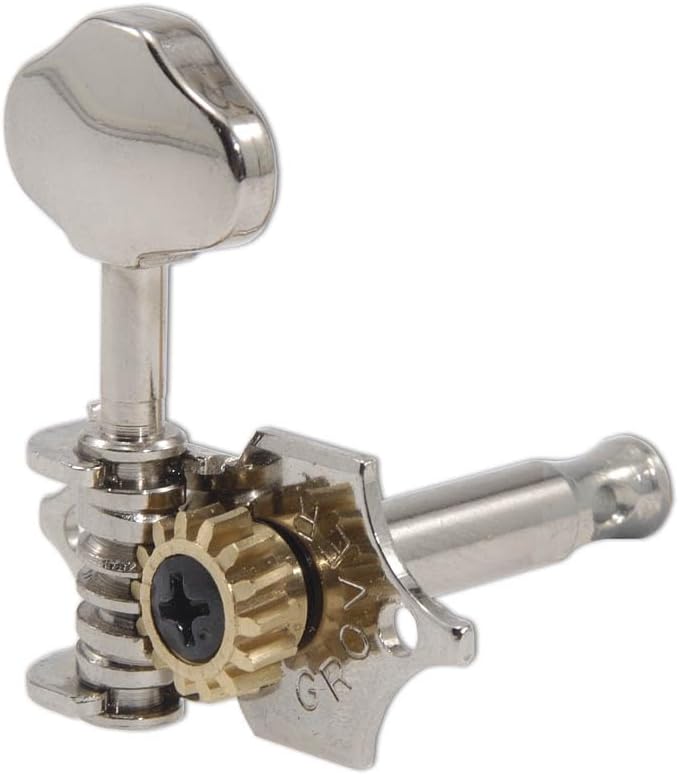
Open-Gear
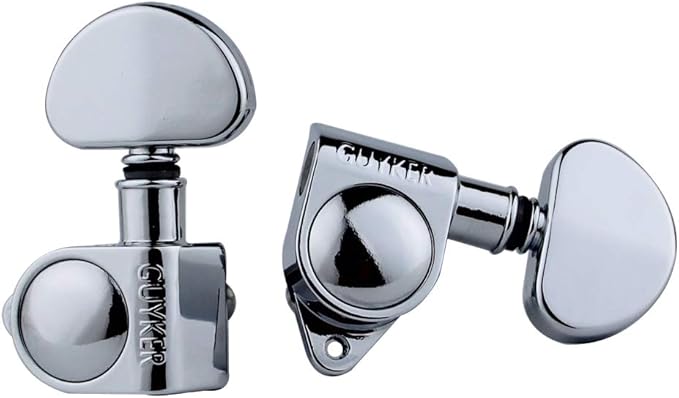
Sealed-Gear
Gear Ratio
What it is: This number (e.g., 18:1, 14:1) tells you how many full turns of the tuner knob it takes for the tuning post to complete one full rotation.
Impact: A higher ratio (e.g., 18:1 or 21:1) means more precise tuning, as each small turn of the knob results in a smaller change in pitch. Lower ratios (e.g., 14:1) are quicker but less precise.
Best For: Higher ratios are generally preferred for fine-tuning and stability.
Brand Quality
Look For: Brands like Gotoh, Grover, Schaller, Waverly (high-end open-gear) are well-regarded for quality, precision, and smooth operation.
Avoid: Generic, unbranded tuners on very cheap guitars can often be sloppy, jumpy, and lead to frustrating tuning issues. Good tuners are a sign of overall quality.
Key Takeaway: Good tuners are paramount for tuning stability and a pleasant playing experience. You want smooth, consistent turning with no slippage or “jumps.”
Bridge Pins
What they do: These small pins hold the string ball-ends securely in the bridge. Their material can subtly affect tone and sustain.
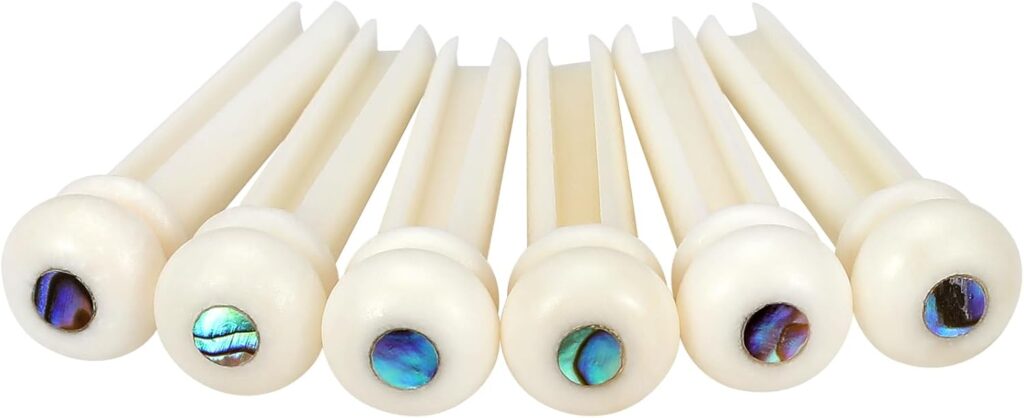
Plastic
Bone
TUSQ / Composite
Ebony
Brass / Metal
Key Takeaway: Upgrading bridge pins can be a cost-effective way to improve tone and sustain on a guitar with plastic pins.
Other hardware considerations.
Nut & Saddle Material
(We covered these in detail, but just a reminder: bone or TUSQ are generally superior for tone and tuning stability compared to plastic.)
Strap Buttons
Function: Simply allow you to attach a strap.
Quality: Usually solid metal. Ensure they’re securely installed and consider strap locks for gigging if you’re worried about your guitar falling off.
Overall Finish (Plating)
Look For: Smooth, even plating (chrome, nickel, gold) on tuners and other metal parts.
Avoid: Uneven, flaking, or rough plating, which can indicate cheaper materials and poor quality control.
A personal note on tuners and hardware
Don’t underestimate the small stuff! While you might not spend hours dissecting the molecular structure of a tuner, these bits and bobs are critical for a frustration-free playing experience. Good hardware means better tuning stability, smoother operation, and often a subtle but noticeable improvement in tone. If a guitar feels cheap because its tuners are sloppy, it’s going to annoy you every time you play. Pay attention to the details – they matter!
If you’re interested in learning how tuning your guitar differently can change the way you play, check out my video “We all have been tuning our guitars wrong“:
Next Chapter: Accessories