The neck of your acoustic guitar is where your hands spend all their time, making it arguably the most important factor in your playing comfort and enjoyment. Let’s explore the elements that influence how a neck feels and plays.
Neck profiles.
The profile refers to the shape of the back of the neck. Here are the most common profiles found on acoustic guitars:
C Shape
C Shape
V Shape
V Shape
U Shape
U Shape
Modern Thin Profiles
Modern Thin Profiles
I’ve found that neck profile preference is incredibly personal. What feels uncomfortable at first might become your favorite after a few weeks of playing. Some of my favorite acoustics have slightly thicker necks than my electric guitars, which initially felt strange but now feels perfect for my acoustic playing style.
Neck woods.
Mahogany
Common Use: Extremely common, and for good reason. It’s stable, relatively lightweight for its strength, and easy to work with.
Feel: Generally provides a warm, comfortable, and often slightly softer feel under the hand compared to maple. It’s a classic for a reason.
Tone Contribution: Often described as having a warm, somewhat “woody” sustain. It’s a neutral-ish canvas that lets the body woods shine.
Stability: Very stable and resistant to warping, which is crucial for neck integrity over time.
Maple
Common Use: Less common for acoustic necks than electrics, but still used, especially on some higher-end or specific models.
Feel: Denser and harder than mahogany, often feeling smoother or slicker, especially if finished. Can feel “faster” to some players.
Tone Contribution: Tends to add a bit more brightness and sustain. It’s a very stiff wood, which means less energy is absorbed by the neck and more goes to the body.
Stability: Extremely stable and strong, very resistant to bending or warping.
Other (Less Common Acoustic Neck Woods)
Cedar: Occasionally used, but primarily as a top wood. If seen as a neck, it’s usually paired with particular body woods for specific tonal goals.
Walnut/Koa/Other Exotics: Rare, typically found on custom or boutique instruments, chosen for aesthetic appeal or very specific tonal nuances.
Neck finish.
Glossy/Polyurethane: Very durable, but can feel “sticky” to some players, especially when hands get sweaty.
Satin/Open Pore: Smoother, less resistance, often feels “faster” and more natural. Less durable than gloss but usually preferred for feel.
Why it matters: Affects how your hand glides up and down the neck. Prioritize comfort here!
Neck width and nut width.
The width of the neck, particularly at the nut, significantly affects playability:
Narrow Nut Width (1.68″-1.70″, or 42.5-43mm)
Characteristics: Strings are closer together, making chord shapes easier to reach.
Best for: Players with smaller hands, those transitioning from electric guitar, or those who primarily play chords.
Medium Nut Width (1.72″-1.75″, or 44-44.5mm)
Characteristics: Balanced spacing that works well for both chord playing and fingerstyle.
Best for: Versatile players who use various techniques and want a good all-around guitar.
Wide Nut Width (1.75″ and above, or 45mm+)
Characteristics: More space between strings, allowing cleaner fingerpicking and less accidental string contact.
Best for: Dedicated fingerstyle players, classical guitarists transitioning to steel-string, or those with larger hands.
Nut material.
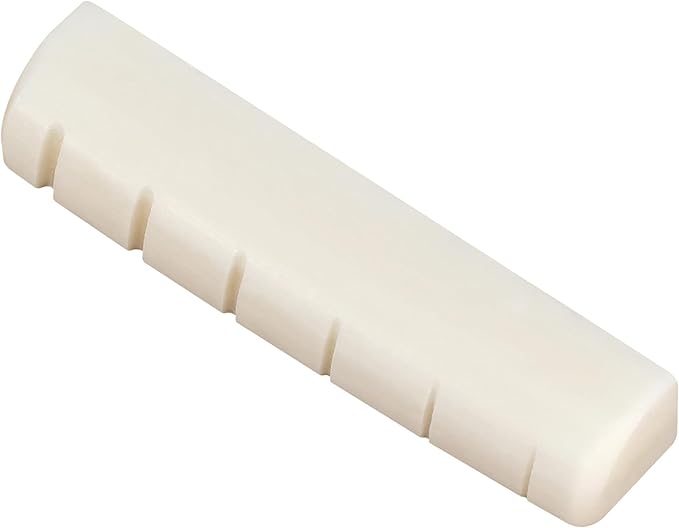
Bone
Graph Tech TUSQ / Black TUSQ XL
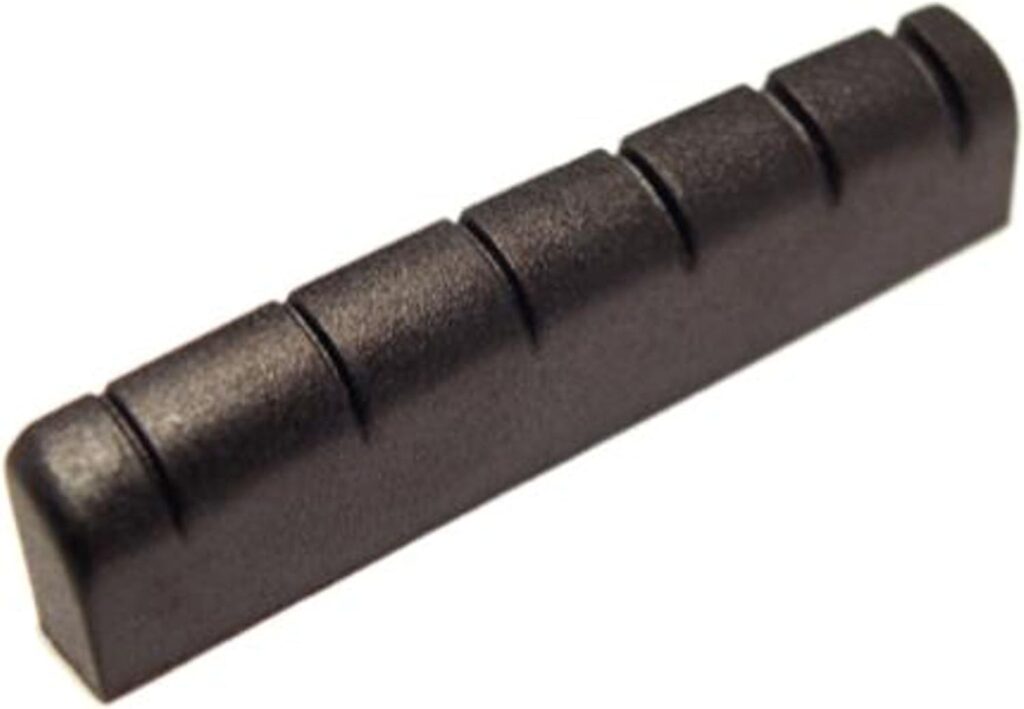
Plastic (e.g., Urea, Melamine, Corian)
Brass/Metal
Fingerboard radius.
The radius refers to the curvature of the fingerboard, measured as the radius of the circle that would form that curve:
Flatter Radius (14″-16″ or 356-406mm)
Characteristics: Less curved fingerboard, often found on modern performance guitars.
Advantages: Better for bending notes, allows lower action without fretting out, comfortable for lead playing.
Vintage-Style Radius (7.25″-12″ or 184-305mm)
Characteristics: More pronounced curve to the fingerboard, common on traditionally-designed instruments.
Advantages: More comfortable for chord playing, naturally fits the curvature of the hand.
Compound Radius
Characteristics: Gradually transitions from a more curved radius near the nut to a flatter radius up the neck.
Advantages: Combines the comfort of a curved radius for chord playing with the benefits of a flatter radius for lead work.
Fingerboard woods.
Rosewood
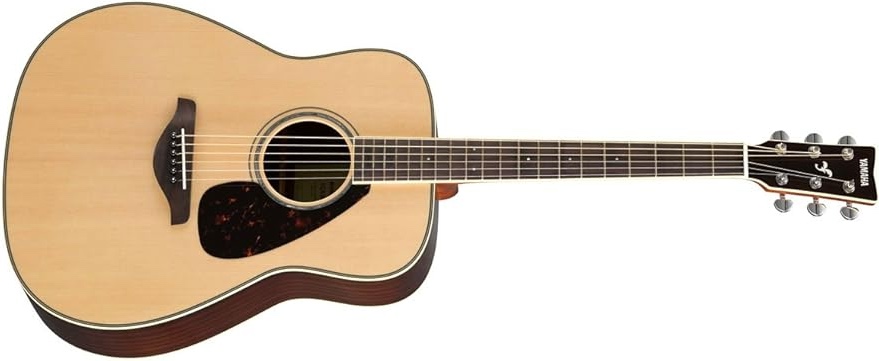
Ebony
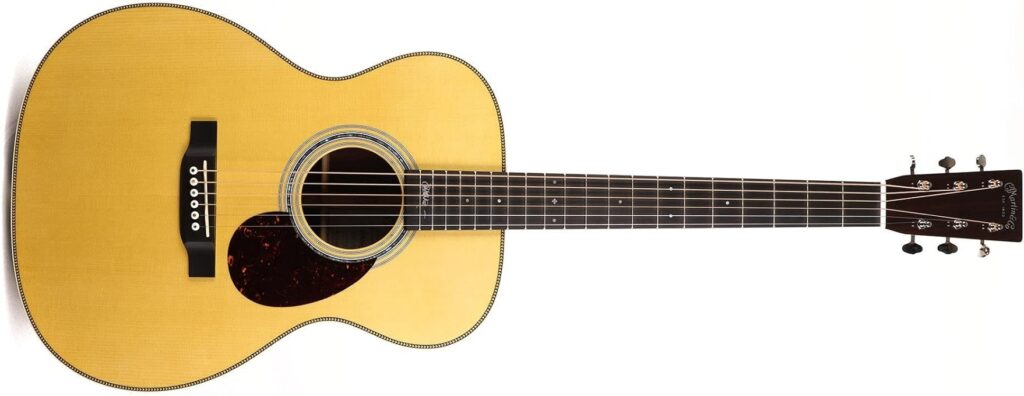
Maple
Richlite
Scale length.
Scale length is the vibrating length of the strings, measured from the nut to the saddle. It significantly affects both playability and tone:
Short Scale (24″-24.75″ or 610-629mm)
Characteristics: Lower string tension, making bending and fretting easier. Often found on smaller body guitars.
Tonal impact: Generally warmer, less bright tone with less string-to-string separation.
Medium Scale (25″-25.4″ or 635-645mm)
Characteristics: Balanced tension, common on Orchestra Models and some other body styles.
Tonal impact: Good balance between warmth and clarity.
Long Scale (25.5″ or 648mm)
Characteristics: Higher string tension, common on dreadnoughts and other larger guitars.
Tonal impact: Generally brighter, more articulate tone with excellent projection.
Action height.
Action refers to the height of the strings above the fretboard. It’s a critical factor in playability:
Low Action
Characteristics: Strings are closer to the fretboard, requiring less pressure to fret notes.
Advantages: Easier to play, less fatigue, potentially faster playing.
Disadvantages: May cause buzz if set too low, potentially thinner tone.
Medium Action
Characteristics: Balanced height that provides good playability without sacrificing tone.
Advantages: Good compromise between playability and sound, works for most playing styles.
Disadvantages: May still feel high to players accustomed to electric guitars.
High Action
Characteristics: Strings sit farther from the fretboard.
Advantages: Typically produces more volume and fuller tone, rarely buzzes.
Disadvantages: Requires more finger strength, can be uncomfortable for long sessions.
My experience: Often, a lot of the playability issues come down to poor setup and high action, which can make even a decent guitar feel like a struggle to play. That’s why I always emphasize the importance of a good setup. You can see some of my thoughts on setup and playability in my video “How bad are cheap guitars? // I tested 4 affordable models”.
Fret size.
Fret wire comes in various heights and widths, affecting both feel and tone:
Vintage/Small Frets
Characteristics: Lower, narrower frets common on traditionally-designed instruments.
Playing impact: More direct fingerboard contact, often preferred for rhythm playing.
Medium Frets
Characteristics: Balanced height and width, the most common size on modern acoustics.
Playing impact: Good compromise between comfort and durability.
Tall/Jumbo Frets
Characteristics: Taller, wider frets more commonly found on electric guitars but appearing on some modern acoustics.Playing impact: Less fingerboard contact, easier bending, but potentially less precise for some techniques.
String material.
Phosphor Bronze
80/20 Bronze (also called “Bronze” or “Brass”)
Silk & Steel / Compound
Coated Strings
String gauge.
Extra Light (.010 – .047 / .011 – .052)
Feel: Super easy to play, very low tension, great for bending.
Tone: Less volume and sustain than heavier gauges, can sound a bit thin on some guitars.
Best For: Beginners, electric players transitioning to acoustic, fingerstyle, guitarists looking to play predominantly lead (for ease of bending), or if you have a smaller-bodied guitar and want to avoid overpowering it.
Light (.012 – .053 / .012 – .054)
Feel: The most common and balanced choice. A good compromise between playability and tone.
Tone: Good volume, sustain, and balance. This is the “standard” acoustic tone.
Best For: All-around acoustic players, strumming, fingerstyle, most general purposes. If you’re unsure, start here.
Medium (.013 – .056 / .013 – .057)
Feel: Noticeably higher tension, requires more finger strength, harder to bend.
Tone: Much more volume, projection, and sustain. Drives the top of the guitar harder, resulting in a richer, fuller sound, especially on larger-bodied guitars like dreadnoughts.
Best For: Heavy strummers, flatpickers, bluegrass players, players who want maximum volume and presence, or for larger-bodied guitars that can handle and benefit from the extra tension.
Heavy (.014 – .059+)
Feel: Very high tension, can be a real workout for your fingers.
Tone: Massive volume, huge sustain, and a very bold, powerful tone.
Best For: Specific flatpicking styles, very aggressive players, or if your guitar is specifically set up for them (they can put a lot of stress on the guitar’s neck and bridge). Less common for general use
Other playability factors.
Neck Joint and Heel Shape
Traditional heel: Larger, more pronounced heel where the neck meets the body.
Modern/Contoured heel: Shaped for better access to upper frets.
String Spacing at Bridge
Narrower spacing: Strings are closer together at the bridge, often preferred for flatpicking.
Wider spacing: More room between strings at the bridge, preferred for fingerstyle.
Enter Grpahic
Choosing your neck. A quick decision tree.
How do your hands like to play?
- Smaller hands? → Consider narrower nut width, shorter scale length, thinner neck profile
- Larger hands? → Wider nut width and more substantial neck profile may feel better
- Average hands? → Medium specifications will likely work well, focus on other preferences
- Primarily chord-based playing? → More curved radius, narrower nut width may be preferable
- Mainly fingerstyle? → Wider nut width, medium to wide string spacing at bridge
- Mix of techniques? → Medium specifications offer the best versatility
- Do you bend strings often? → Flatter radius, medium to tall frets, shorter scale length
- Do you play primarily in first position? → Neck heel shape less important, focus on neck profile comfort
- Do you frequently play up the neck? → Consider cutaway models and guitars with contoured heel designs
Playability checklist when buying a guitar.
When testing a guitar’s playability, pay attention to:
- Neck comfort – Does the profile feel good in your hand?
- String spacing – Do you have enough room for your playing style?
- Action height – Are the strings at a comfortable distance from the fretboard?
- Upper fret access – If needed, can you comfortably reach higher positions?
- Fret edges – Are they smooth, with no sharp ends protruding?
- Overall balance – Does the guitar sit comfortably on your lap or with a strap?
- Weight – Is it comfortable for long playing sessions?
- Intonation – Does it play in tune all over the neck?
A personal note on playability
Playability is deeply personal. A neck that feels perfect to one player might feel awkward to another, and vice versa. This is why trying guitars before buying them is so important.
Don’t be discouraged if finding your perfect neck feels like a journey. It’s normal to try many guitars before finding “the one” that feels like an extension of your hands. Once you find that guitar, though, it’s a magical feeling – suddenly playing becomes more intuitive, more expressive, and more joyful. That’s worth taking the time to find.
Next Chapter: Tuners and Hardware