The body shape of an acoustic guitar affects not just how it looks, but also how it feels against your body, how it projects sound, and what tonal characteristics it possesses. Let’s explore the most common acoustic guitar body shapes and what makes each one special.
Traditional body shapes. From parlor to jumbo.
0 (Single-O) / Parlor
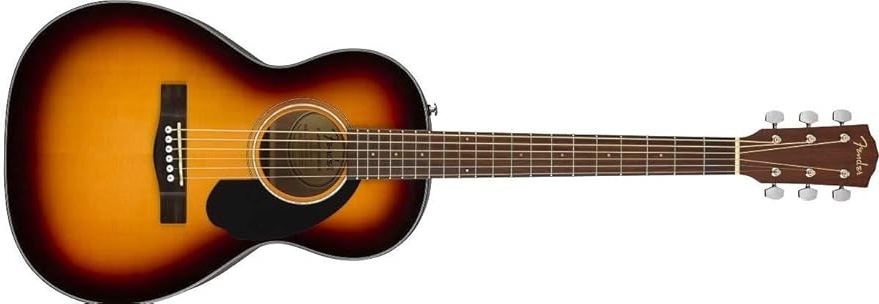
Both 0 (Single-O) and Parlor guitars have remarkable projection and focus. When you play a single note on them, there’s this immediate response that you don’t always get from larger guitars: the body just moves with you and each note has its own distinctive sound to it.
These small guitars let you hear the single note, where larger guitars blend everything together into a chord. It’s perfect for blues and folk music where that midrange focus really helps your playing cut through.
00 (Double-O)
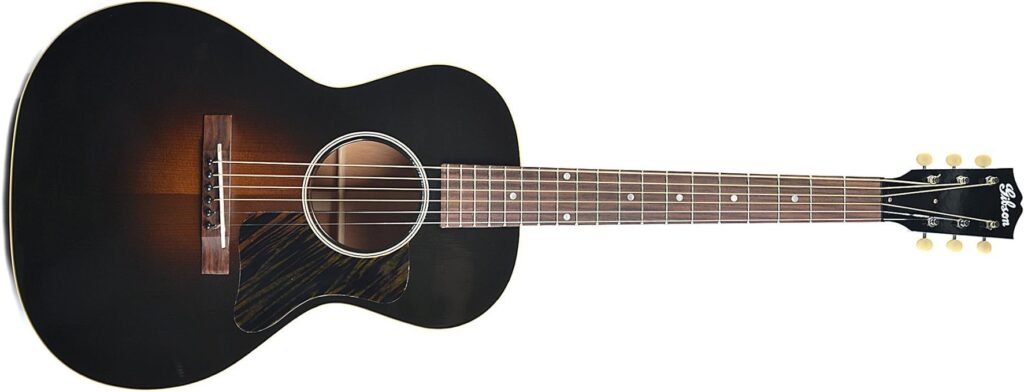
The 00 is like the Parlor’s slightly more versatile cousin. You still get excellent definition, but with a touch more tonal range. There’s a little bit more sparkle on the top end compared to the Parlor, though perhaps a little less low end. The range of tones is a little bigger, making it more versatile but less distinctive in its specific sound.
000/OM (Orchestra Model)
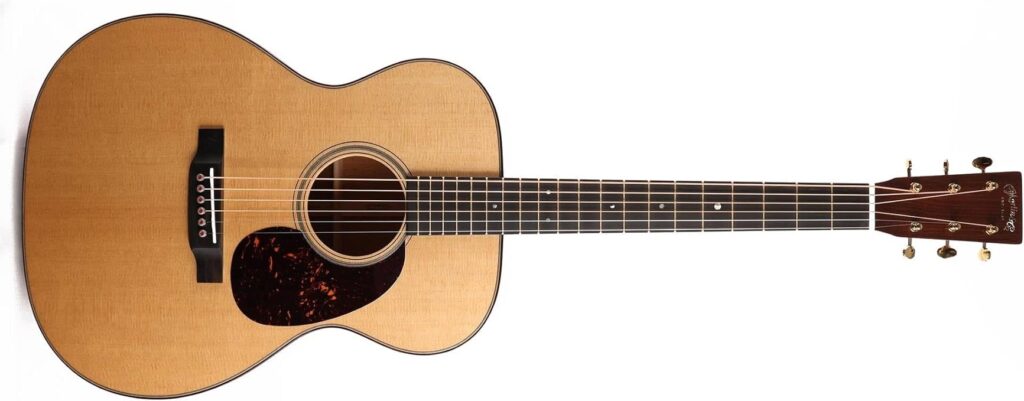
The 000/OM might be the most versatile body shape of all. It’s currently one of the most popular shapes worldwide, and for good reason. You can really play it beautifully with your fingers, it’s delicate and articulate, but it’s also suitable for strumming.
When you play an OM, you get all the highs, all the lows, and everything becomes one. My Collings OM2H is one of my absolute favorite guitars. I showcase this guitar and explain why I love it in my video “The 3 most beautiful guitars in the world!”.
Dreadnought
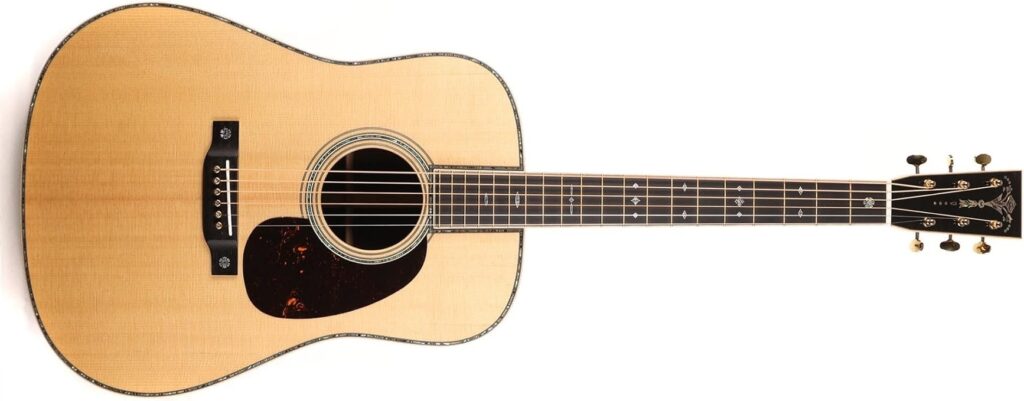
When you strum that first E chord on a good dreadnought, something magical happens. The room just fills with sound, and you feel the guitar pumping, moving air around you.
In country and blues bands, guitarists were fighting to be heard over the much louder banjo players, so the dreadnought was invented. There were no PAs back in the 20s and 30s, so if you wanted to be heard, the guitar had to be bigger.
My Martin D-42 is a dreadnought, and it’s one of my most treasured instruments. You can hear how powerful this guitar sounds in my comparison video “The 3 most beautiful guitars in the world!”.
Grand Auditorium
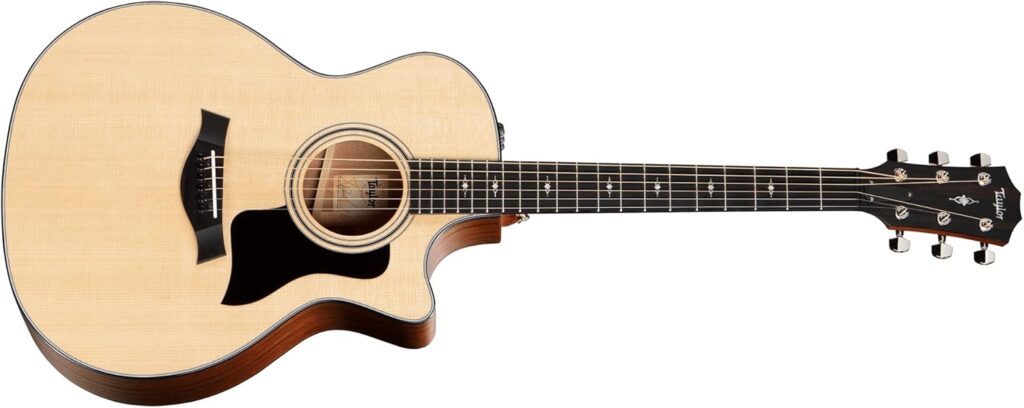
The Grand Auditorium is like the “love child” between a dreadnought and an OM. Bob Taylor (co-founder and president of Taylor guitars) popularized this shape, and it serves a specific purpose: providing versatility for players who want to do a bit of everything.
The narrower waist makes it more comfortable than a dreadnought, while the overall size gives you more projection than an OM. It’s perfect for strumming and for fingerpicking, basically the ideal guitar for electric guitar players transitioning to acoustic. My Taylor 716ce has this shape. You can see and hear how this guitar sounds in this video here.
Slope-Shoulder Dreadnought
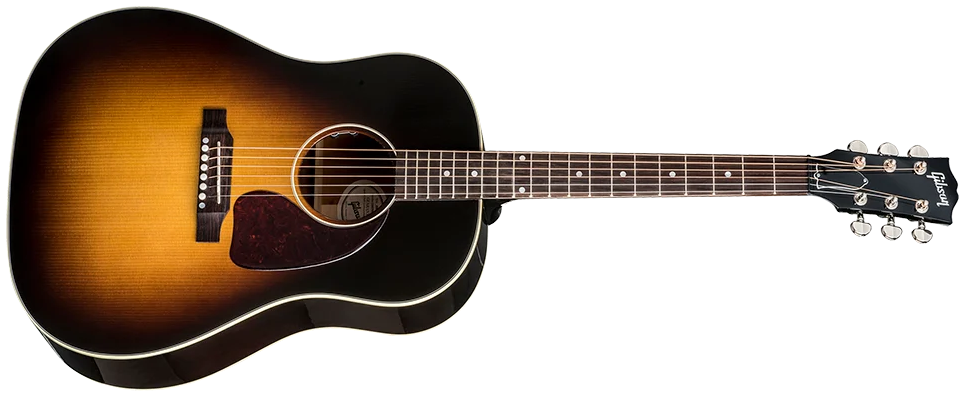
There’s something special about slope-shoulder dreadnoughts. While they’re very similar to standard dreadnoughts, they have this wonderful natural compression, especially when comparing a standard dreadnought like the Martin D-28 to the iconic slope-shoulder dreadnought, the Gibson J-45.
When you strum hard, the low end doesn’t overwhelm the rest of the sound, you can control it. Your right hand really controls the low on that slope shoulder, where with a regular dreadnought, it’s harder to control. This makes slope-shoulder models excellent for recording.
Jumbo
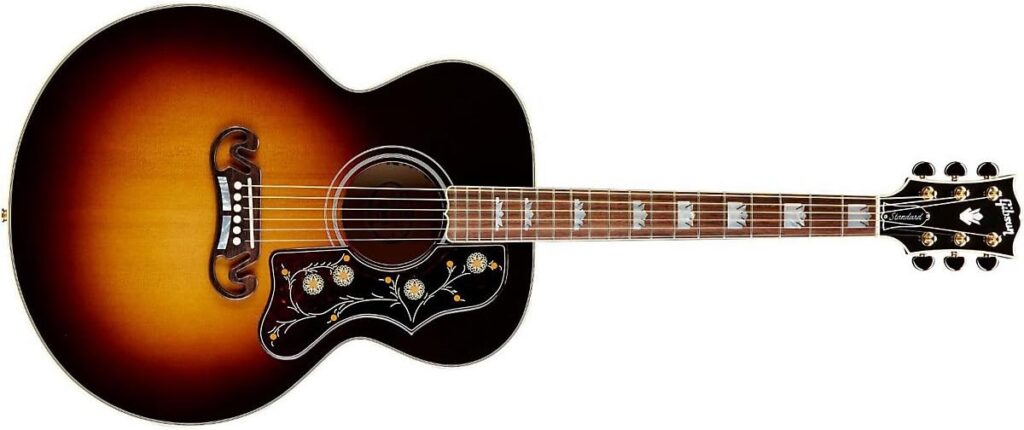
Jumbos are statement guitars, both visually and sonically. They’re big and bold. The natural jumbo sound has a lot of low end, which is why they’re often built with maple back and sides to add some clarity to the tone. There’s not as much midrange, so the tone is quite scooped in the middle.
It’s a great guitar for those who really like to play big and powerful open chords. When I think of a jumbo, I immediately picture Elvis Presley with his Gibson SJ-200. It’s a flashy guitar, and it’s also a guitar with the most beautiful inlays.
Modern and specialized body shapes. Travel and cutaways.
Mini/Travel Guitars
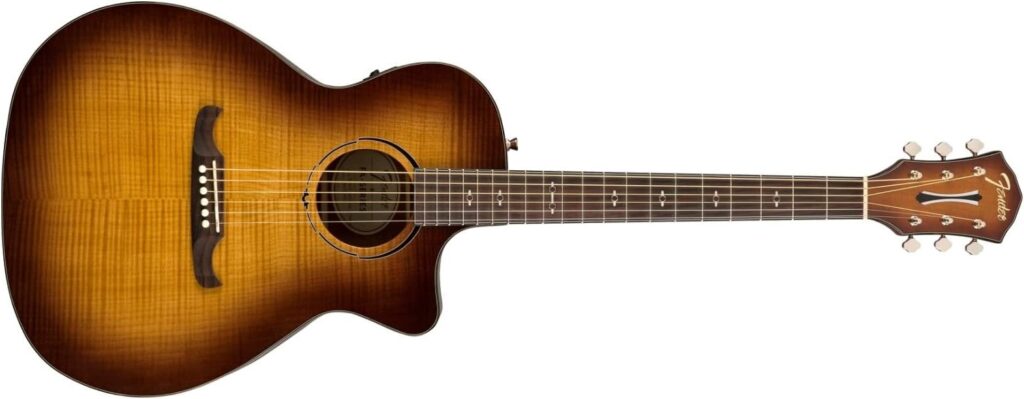
Cutaway vs. Non-Cutaway
How to choose the right body shape. A practical guide.
Playing Style
- Primarily fingerstyle? Consider Parlor, 00, 000/OM, or Grand Auditorium shapes for their clarity and articulation.
- Mostly strumming? Dreadnought and Jumbo shapes offer more volume and bass response.
- A mix of techniques? 000/OM or Grand Auditorium shapes provide excellent versatility.
Physical Comfort
- Smaller frame? Smaller body shapes will be more comfortable, especially for long playing sessions.
- Back or shoulder issues? Consider lighter, smaller guitars or those with ergonomic features.
- Play standing or seated? Some shapes (like dreadnoughts) can be less comfortable when seated due to their size.
Sound Preferences
- Want focused, midrange-rich tone? Smaller body shapes like Parlor and 00 excel here.
- Need maximum bass and volume? Dreadnought and Jumbo shapes are your best bet.
- Seeking balanced tone? 000/OM and Grand Auditorium offer excellent balance across the frequency spectrum.
Choosing your body shape. A quick decision tree.
What style(s) of music do you primarily play?
- Folk, Blues, or Fingerstyle? → Consider smaller body shapes (Parlor, 00, 000/OM)
- Bluegrass, Country, or Heavy Strumming? → Larger body shapes might be better (Dreadnought, Jumbo)
- A mix of styles or singer-songwriter material? → Versatile shapes will serve you well (000/OM, Grand Auditorium)
- Smaller frame? → Avoid Jumbo and possibly Dreadnought shapes
- Average to larger frame? → Any shape could work physically, choose based on sound preferences
- Play primarily seated? → Shapes with more defined waists (000/OM, Grand Auditorium) may be more comfortable
A personal note on body shapes
The body shape is perhaps the most fundamental choice you’ll make. While you can change strings, modify electronics, and even upgrade tuners, the body shape is permanent and defines much of the guitar’s character.
I’ve found that different body shapes serve different musical purposes. There’s no “best” shape, just the shape that best suits your playing style, physical build, and sonic preferences. I have four main acoustics that I use regularly – my Collings OM2H orchestra model, my Atkin Forty Seven (slope-shoulder double-o), Vintage Martin D-28 dreadnought and a Dowina Bona Vida parlor guitar – and each one serves a different purpose in my playing.
For a more detailed comparison of how different acoustic guitar body types sound and feel, check out my video:
My advice: try as many different shapes as possible before buying. The difference in feel and sound between various body styles is profound, and finding the right match can make the difference between a guitar that sits in the corner and one you can’t put down.
Next Chapter: Tonewoods